
Reaching your sixties can bring unexpected social upheaval. Retirement strips away workplace relationships, relocation separates you from familiar faces, and reduced mobility can make spontaneous meetups feel like mountaineering expeditions. Yet maintaining meaningful social connections becomes more vital, not less—research consistently shows that social isolation accelerates cognitive decline and increases health risks as significantly as smoking fifteen cigarettes daily.
The good news? The landscape of community engagement for older adults has evolved far beyond dusty church halls and Wednesday afternoon bingo. Modern community infrastructure offers pathways tailored to varied mobility levels, diverse interests, and different social appetites. Whether you’re an extrovert craving intellectual stimulation or someone who needs gentle, low-commitment contact, understanding the ecosystem of available connections empowers you to design a social life that sustains rather than drains you.
This resource maps the practical terrain of building and maintaining connections in later life—from taking that nerve-wracking first step into a community space, to structuring neighbourhood safety networks, to recognising when informal support needs professional reinforcement.
The paradox of ageing is that precisely when social contact becomes medically critical, the structures that once delivered it automatically begin to crumble. Your professional identity—the “project manager” or “headteacher”—evaporates overnight, taking with it the status and daily interactions that reinforced your sense of purpose. Downsizing from a family home to a manageable flat might eliminate the workshop or garden that once drew neighbours into conversation.
Simultaneously, the health stakes rise. Social isolation doesn’t just feel lonely—it triggers measurable physiological stress responses, elevates blood pressure, and weakens immune function. Think of regular social interaction as comparable to taking a daily medication: skip too many doses, and the consequences compound silently until a crisis forces attention.
Mobility constraints add another layer. Reduced vision makes evening events intimidating. Arthritis turns the walk to the community centre into a calculated expedition requiring rest periods. These barriers aren’t insurmountable, but they demand intentional strategy rather than the spontaneous socialising of earlier decades.
The threshold moment—walking into a community hall alone for the first time—stops more people than any membership fee or transport difficulty. The fear is primal: will you be ignored, judged, or worse, patronised?
Not all groups are equally accessible to first-timers. Knitting circles and craft groups tend to outperform book clubs for newcomers because hands keep busy, removing the pressure for constant eye contact and conversation. The shared task creates natural pauses and easy conversational hooks (“What pattern are you following?”).
Look for groups explicitly advertising “drop-in” sessions rather than courses requiring advance registration. University of the Third Age (u3a) groups, widely available across communities, deliberately structure themselves to welcome continuous new membership, with rotating facilitators rather than hierarchical leadership.
Every community group has an unofficial “welcomer”—often not the official chairperson, but the person who instinctively notices a hesitant newcomer and makes introductions. Arriving fifteen minutes early lets you identify this person (usually setting up chairs or sorting refreshments) and have a brief one-to-one conversation before the room fills. Mention you’re new; their guidance becomes your social map.
Community centres host different crowds at different times. Mid-morning sessions tend to attract the “younger senior” demographic (60-70) still physically active. Early afternoon slots often accommodate those managing energy levels or relying on community transport. Visiting at various times helps you find your cohort.
Volunteering offers something transactional socialising cannot: restored purpose. After decades of professional competence, many retirees feel adrift. A structured volunteer role provides both social contact and the psychological benefit of being needed.
Charity shops offer varied roles—till work suits those comfortable standing, whilst sorting stock in the back room accommodates limited mobility and provides quieter social interaction. Food banks increasingly need telephone coordinators or administrators, roles requiring cognitive skill rather than physical stamina.
Trustee positions on charity boards replace some of the status lost with retirement, demanding strategic thinking and governance skills honed over a career. Shop volunteering offers lighter commitment and immediate social reward—the regular customers who become familiar faces.
The mistake of over-committing happens frequently. Flattered to be asked, newly retired individuals accept committee roles or coordination responsibilities before understanding the energy drain. Start with a contained, time-limited role (two-hour shop shifts) before accepting positions requiring evening meetings or year-round commitment.
Whilst community groups provide social stimulation, your immediate neighbours form your practical safety net. The goal isn’t deep friendship—it’s reliable, reciprocal awareness.
Aim to cultivate three nearby households who know your routine well enough to notice disruption. Three provides redundancy—one might be on holiday, another ill, but the third remains available. This isn’t about burdening neighbours; it’s about structured, mutual security.
The British instinct to “keep myself to myself” becomes dangerous when it prevents accepting—or offering—help. Even with limited mobility, you can take in parcels, feed cats during holidays, or provide a spare key for emergencies. These small exchanges build the credit that makes asking for help feel less awkward when you need a prescription collected.
In some streets, neighbours establish simple systems: curtains opened by 10am signals all is well. A “nominated neighbour” arrangement means unexpected callers can be referred to a trusted local who helps verify legitimate visitors versus potential scammers. These systems require minimal energy but provide disproportionate peace of mind.
Social interaction, particularly for introverts or those managing chronic conditions, consumes energy as real as physical exertion. Without management, you risk the feast-or-famine pattern: over-committing one week, then withdrawing for a month to recover.
Three meaningful interactions per week provides a research-backed baseline for maintaining wellbeing without exhaustion. A “meaningful interaction” means more than transactional shop exchanges—think: a twenty-minute coffee, a phone conversation with substance, or a shared activity. Scheduling these in a diary like medical appointments prevents the drift into accidental isolation.
Knowing when to leave preserves energy for the next event. Departing after ninety minutes at a social event, whilst energy remains positive, beats staying until exhaustion turns you antisocial. The key is framing: “I need to leave whilst I’m still enjoying myself—see you next week” sounds gracious rather than rude.
Resist joining organising committees in your first six months with any group. Observe the group dynamics, identify the energy-drainers versus the energisers, and understand what you’re committing to before accepting responsibility. The person who joins the committee too soon often burns out and loses the social benefit the group originally provided.
Movement-based groups offer dual benefits: the cognitive and cardiovascular gains of exercise, plus the social momentum of shared activity.
Walking football adapts the beloved sport to senior physiology—no running allowed, reducing joint impact whilst preserving the teamwork and competitive satisfaction. Lawn bowls provides gentle movement with significant social infrastructure—clubs often have thriving social committees organising events beyond the sport itself.
The choice between activities often comes down to culture as much as physicality. Bowls clubs tend to be more formal; walking football attracts those missing team camaraderie.
Membership fees tell only part of the financial story. Bowls requires specialist woods (£100-300), shoes, and often white clothing for matches. Walking football needs minimal kit but may charge per session rather than annual membership. Calculate the genuine twelve-month cost before committing.
YouTube tutorials for tai chi or chair yoga offer convenience and privacy but lack the crucial form correction that prevents injury. An instructor spotting incorrect posture protects your joints; a screen cannot. For learning new physical activities, in-person instruction is the safer investment, shifting to home practice once correct form is established.
Downsizing often eliminates the garage workshop or garden shed—the physical space where many men found both purpose and social contact. Men’s Sheds provide communal workshops where members pursue woodwork, metalwork, or repair projects. The genius is oblique socialising: conversation happens around shared tasks, suiting those uncomfortable with sitting-and-talking formats.
University of the Third Age groups combat a rarely discussed aspect of retirement: intellectual boredom. Peer-led learning groups cover everything from philosophy to photography, attracting those who miss the cognitive stimulation of professional life. The non-hierarchical structure (members teach each other) prevents the school-like dynamic some find patronising.
Niche interests—genealogy, bird-watching, local history—often support vibrant senior communities. The shared passion provides instant conversational foundation, and the focus on the interest rather than age creates intergenerational mixing that keeps groups dynamic.
Picture-postcard villages can become social prisons when bus routes are cut and driving becomes unsafe. The local pub, reimagined as a morning coffee venue rather than evening drinking spot, can become a crucial social anchor. Many landlords welcome daytime custom; clarify you’re ordering coffee, and the space becomes accessible to non-drinkers.
Community car schemes and volunteer driver networks exist in many areas but require active seeking-out—contact your local council’s adult services or Age UK branch for local coordination. These services transform “trapped” isolation into managed independence.
Bereavement, chronic illness, or major life transitions sometimes require more than friendly chat can provide. Organisations like Cruse offer structured grief support with trained counsellors who understand the specific trajectory of loss. The signal you need professional support rather than informal coffee meetups: when the same painful thoughts circle for months without resolution, or when friends begin gently withdrawing because the conversation has become repetitively dark.
Recognising this boundary isn’t failure—it’s appropriate matching of need to resource. Informal community provides ongoing connection; professional support provides the intensive intervention to reach a place where community connection can be enjoyable again.
Building a sustainable social life in later years isn’t about recreating the intensive socialising of earlier decades. It’s about designing a right-sized network that balances stimulation with rest, provides both security and purpose, and adapts as your needs and capacities evolve. The infrastructure exists; the task is mapping your specific route through it.
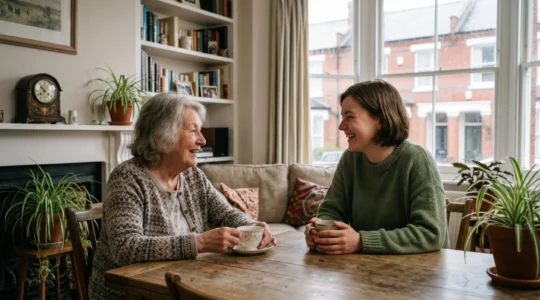
The safety and viability of a UK homeshare scheme depend entirely on implementing a rigorous, professional vetting and management process, not on chance or goodwill. A formal Co-habitation License Agreement is non-negotiable to define boundaries and prevent personal conflicts. Only…
Read more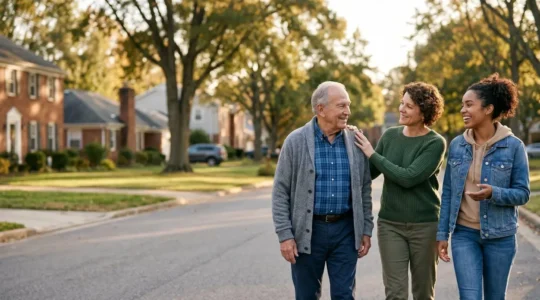
In summary: Relying on a single neighbor creates a single point of failure; true security comes from a structured system. Build an intentional “emergency pod” of three trusted neighbors to ensure someone is always available. Use a police-approved key safe…
Read more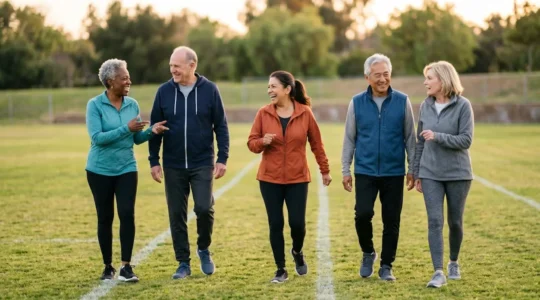
Choosing the right senior sport is only half the battle; staying in the game safely and affordably is the real challenge. True fitness requires mitigating hidden risks: biomechanical (knees), financial (club fees), and psychological (competitive stress). Adapting activities and building…
Read more
A modern community centre isn’t about killing time; it’s a strategic resource for launching your ‘Third Act’. It offers tangible replacements for assets lost in retirement, such as intellectual collaboration (u3a), a dedicated workspace (Men’s Sheds), and professional status (trustee…
Read more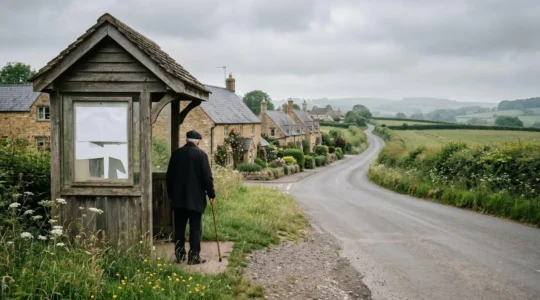
When the local bus route is cut, the greatest risk isn’t just transport—it’s the slow erosion of the small, daily connections that prevent loneliness. Generic advice like “use Zoom” or “join a club” fails to address the practical and emotional…
Read more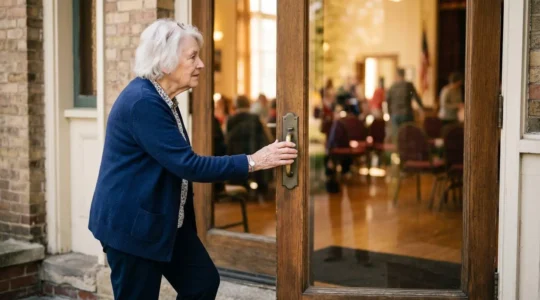
The secret to overcoming social anxiety isn’t fighting your feelings—it’s strategically choosing an environment that works with them. Focus on groups built around a “parallel activity” (like knitting), which lowers the pressure to make constant conversation. Create a simple “entry…
Read more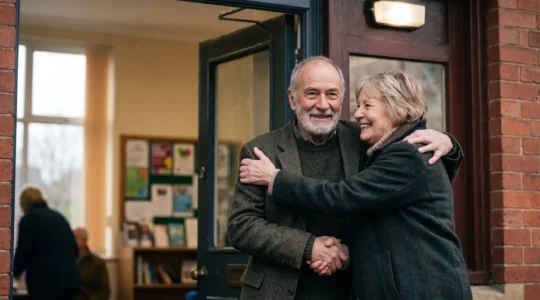
In summary: Feeling isolated in a new town is a logistical challenge, not a personal failing. You can take control by actively engineering new connections. Discover local groups without using Facebook by checking library notice boards, contacting your parish council,…
Read more