
Maintaining overall health and balance after sixty isn’t about fighting ageing—it’s about working intelligently with the changes your body experiences. The difference between thriving independently at home and facing preventable crises often comes down to small, strategic adjustments made consistently across several interconnected areas of daily life.
This comprehensive resource explores the core pillars that determine whether you maintain your independence and quality of life: physical safety within your home environment, nutritional strategies that fuel both body and brain, cardiovascular health management, restorative sleep, effective medication oversight, and the energy management techniques that extend your active hours. Each element reinforces the others, creating either a virtuous cycle of wellbeing or a cascade of decline.
Understanding these fundamentals empowers you to make informed decisions, distinguish helpful interventions from common mistakes, and build a sustainable approach to healthy ageing that preserves what matters most: your autonomy, comfort, and engagement with life.
Your home environment acts as either a protective factor or a hidden hazard. After sixty, physiological changes in vision, balance, and reaction time mean that spaces which felt perfectly safe for decades can suddenly harbour risks. The good news: most fall-related injuries are entirely preventable through targeted environmental modifications.
Age-related changes to the eye mean that a sixty-year-old requires approximately three times more light than a twenty-year-old to perceive the same level of detail. This isn’t about vanity—it’s about depth perception and obstacle detection. Inadequate lighting transforms small hazards like rug edges or step thresholds into genuine fall risks.
The most critical intervention is a continuous lighted pathway from bed to toilet, which research shows prevents roughly 30% of nighttime falls. Motion-activated LED strips that provide low-level illumination allow safe navigation without the disorienting effect of switching on bright overhead lights, which can actually worsen balance temporarily due to sudden pupil constriction.
For individuals experiencing dementia or cognitive changes, visual contrast prevents trips more effectively than verbal warnings. The brain processes high-contrast boundaries automatically and pre-consciously, whereas processing spoken instructions requires working memory and attention—capacities often diminished in dementia.
Practical applications include contrasting tape on step edges, toilet seats in a different colour to surrounding flooring, and light switches outlined in contrasting colours. These modifications work silently in the background, requiring no conscious effort or memory from the user.
One of the most dangerous mistakes is improvising grab handles from fixtures never designed to bear body weight. Heated towel rails, in particular, send hundreds to emergency departments annually when they detach from walls under sudden loading. These are typically secured with small screws into plasterboard—adequate for a towel, catastrophic when grabbed during a slip.
Proper grab rails must be fitted to structural timber or masonry with appropriate fixings rated for dynamic loads of at least 150kg. The cost difference is minimal; the outcome difference is life-changing.
What you eat, when you eat it, and how you prepare it profoundly influences everything from cognitive function and immune resilience to physical energy and thermoregulation. Nutrition in later life isn’t about restriction—it’s about strategic optimization.
The timing of your main meal significantly affects afternoon cognitive performance. A heavy, carbohydrate-rich lunch triggers post-prandial somnolence—the familiar afternoon slump—which results from insulin response and digestive blood flow diversion. For individuals managing cognitive decline or simply wanting to maintain afternoon alertness for activities, shifting the largest meal to early evening (around 5-6 PM) and keeping lunch lighter and protein-focused can preserve mental clarity through the day’s second half.
Conversely, if social lunch clubs form an important part of your week, the hot meal they provide offers not just nutritional value but also social connection, which itself protects cognitive health. The “best” timing depends on your individual priorities and lifestyle structure.
Ageing impairs thermoregulation—your body’s ability to maintain stable core temperature. In winter months, food choices become a thermal management tool. Slow-release carbohydrates found in root vegetables like parsnips provide sustained energy and warmth generation, whereas raw salads and cooling foods like cucumber actively lower core temperature—potentially dangerous during cold snaps when older adults already struggle to maintain warmth.
This principle extends to beverages: switching from regular tea (which can have a cooling effect as the body processes it) to hot lemon and ginger water actively stimulates circulation and maintains core warmth without the diuretic effect of caffeine, which contributes to nighttime bathroom trips.
A common misconception is that expensive supplements offer superior nutrition to whole foods. In reality, bioavailability—the proportion your body actually absorbs and uses—is typically far higher from food sources. A modest orange provides vitamin C in a matrix of cofactors (bioflavonoids, fibre, other micronutrients) that enhance absorption and utilization, whereas isolated ascorbic acid tablets often pass through largely unused.
There are important exceptions: Vitamin D supplementation is genuinely necessary during British winter months when solar angle prevents skin synthesis, and specific medical conditions may require therapeutic supplementation. However, for most nutrients, whole food sources on a modest budget outperform expensive pill regimes. The key is variety—eating the same meal daily, while simple, inevitably creates nutrient deficiency patterns over months.
How you cook vegetables matters as much as eating them. Boiling broccoli for extended periods destroys approximately 50% of its glucosinolates—the cancer-protective compounds that make brassicas nutritionally valuable. Steaming for 3-4 minutes or microwaving briefly preserves these compounds while maintaining palatability. Small technique changes yield significantly different nutritional outcomes from identical ingredients.
One of the most overlooked aspects of maintaining independence is managing your daily energy envelope. Many older adults unknowingly sabotage their own wellbeing through two opposite errors: resting too much (accelerating deconditioning) or the “boom and bust” cycle (overdoing activity on good days, then being bedbound for two days recovering).
The solution is strategic energy pacing: inserting planned 10-minute rest periods between activities. This seemingly minor intervention can extend your active, productive day by up to two hours. The rest prevents the accumulation of fatigue that leads to early afternoon collapse. Think of it like interval training—brief recovery allows sustained performance.
Equally important is avoiding prolonged inactivity. The “resting too much” error creates a vicious cycle: reduced activity leads to muscle atrophy within three months, which increases fatigue, which leads to more resting. Breaking this cycle requires gentle, consistent movement—even short walks or chair-based exercises maintain muscle protein synthesis and cardiovascular conditioning.
For those using mobility aids, there’s a common fear that accepting a walker means “giving up” or accelerating decline. The evidence shows precisely the opposite: using appropriate walking aids actually keeps you walking longer by reducing fall fear, improving confidence, and decreasing the energy cost of movement. The walker isn’t a symbol of defeat—it’s a tool that extends your active lifespan.
Cardiovascular health determines everything from exercise tolerance and cognitive function to stroke risk and lifespan. Two aspects deserve particular attention: safe exercise progression and accurate home blood pressure monitoring.
For individuals with cardiac history or simply beginning exercise after prolonged inactivity, the “Talk Test” proves safer and more practical than heart rate monitors. If you can speak in full sentences during activity, you’re in a safe aerobic zone. If you’re breathless and can only speak in short phrases, you’ve exceeded safe intensity for your current fitness level.
This approach is self-calibrating—it automatically adjusts to your individual fitness, doesn’t require expensive equipment, and directly reflects your body’s current state rather than relying on age-predicted formulas that may not apply to your individual cardiovascular capacity. Progressive increases of 10% weekly in walking distance prevent breathless episodes while steadily building endurance.
Warm-up duration becomes increasingly important with age, particularly for cardiac patients. Extending warm-up to 15 minutes allows gradual cardiovascular adaptation and reduces the shock of sudden exertion on the heart. Never exercise outdoors in freezing air if you have angina—cold air constricts coronary arteries and can trigger symptoms even at low exertion levels.
Home blood pressure readings are invaluable for diagnosis and medication adjustment, but five common mistakes create misleading results: measuring immediately after activity (wait 5 minutes seated), using an incorrectly sized cuff, resting the arm unsupported (adds 10 points to readings), talking during measurement, and measuring only once rather than taking three readings and averaging.
Your blood pressure at the GP surgery is typically higher—”white coat hypertension”—due to anxiety. Home readings provide a more accurate picture of your true cardiovascular status. If there’s significant discrepancy, 24-hour ambulatory monitoring can resolve the question definitively.
Sleep architecture changes with age. Waking at 4 AM becomes normal after seventy, but staying awake indicates a problem—typically anxiety, medication effects, or poor sleep pressure management. “Sleep pressure” is the biological drive to sleep that accumulates during waking hours and dissipates during sleep.
The critical error is the afternoon nap that’s too long or too late. A nap after 3 PM or longer than 20-30 minutes dissipates sleep pressure, making nighttime sleep onset difficult. This creates a vicious cycle: poor night sleep leads to daytime fatigue, leading to longer naps, leading to worse night sleep.
Stopping caffeinated tea by 2 PM prevents it from interfering with sleep while reducing nocturia—nighttime urination that fragments sleep and increases fall risk during dark bathroom trips. The lighted pathway mentioned earlier becomes crucial here, as does strategic fluid intake (more in morning, minimal after 6 PM).
Medication complexity increases with age, creating risks of drug interactions, “polypharmacy” (taking multiple medications that may no longer be necessary), and simple administration errors. Demanding an annual medication review from your GP is not pushy—it’s essential healthcare. Many medications prescribed years ago may no longer be appropriate, and the cumulative interactions of five or more medications become unpredictable.
Practical tools matter: dosette boxes versus original packaging depends on your cognitive status and whether a carer administers medication. Aligning all prescription renewal dates so you visit the pharmacy once monthly rather than multiple chaotic trips reduces cognitive load and missed doses. Electronic Repeat Dispensing (eRD) automates the process entirely for stable, long-term medications.
Preventive screening attendance is equally crucial. Men over 65 must attend their Abdominal Aortic Aneurysm ultrasound screening—a painless test that detects a silent condition that’s fatal if it ruptures but manageable if caught early. Similarly, opticians often detect diabetes or glaucoma before GPs through routine eye examinations. Never dismiss persistent heartburn as “just old age”—it may indicate serious cardiac or gastrointestinal pathology requiring investigation.
Overall health and balance in later life emerges from the intelligent integration of these interconnected domains. Small, evidence-based modifications to your environment, nutrition, activity patterns, and health management create compounding benefits that preserve independence, comfort, and quality of life for years beyond what reactive, crisis-driven approaches achieve.
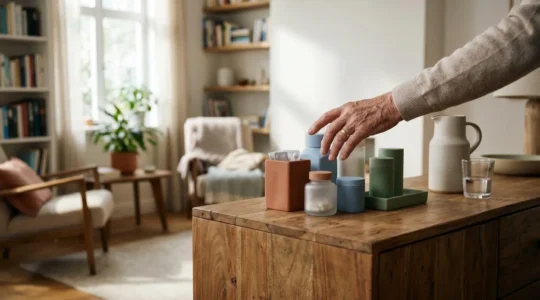
In summary: Electronic Repeat Dispensing (eRD) is more than convenience; it’s a system for taking full control of your medication logistics. Start by synchronising all your prescription renewal dates with your GP to enable a single, predictable pharmacy visit or…
Read more
Waking early after 70 is a biological norm, but the inability to fall back asleep is an environmental problem you can solve. Your body’s internal clock (circadian rhythm) naturally shifts forward with age, causing earlier wake times. Fragmented sleep is…
Read more
Accurate home blood pressure monitoring isn’t about following a simple checklist; it’s about understanding the specific, quantifiable impact of subtle errors. An unsupported arm can falsely add up to 9 mmHg to your systolic reading, potentially leading to incorrect medication…
Read more
The fear of falling often makes balance-improving exercises feel inaccessible, but the solution might not be on your feet. Chair yoga is a precise system that rebuilds stability from the core outwards, making it a powerful tool for fall prevention….
Read more
In summary: Prioritize the “Talk Test” over complex heart rate monitors for a simpler, safer gauge of your exertion level. Adopt the “10% Rule” for weekly walking increases to build stamina progressively and avoid breathlessness. Be acutely aware of your…
Read more
Rethinking immunity after 65 means going beyond the flu jab and addressing the root causes of age-related immune decline, known as immunosenescence. The real battlefield for your immunity is your gut, where 70% of your immune system resides and is…
Read more
Staying warm during a British winter is not about how hot your food is, but how much metabolic heat it generates. Slow-release carbohydrates from root vegetables provide sustained energy that your body converts into warmth, unlike the temporary fix of…
Read more
Contrary to relentless marketing, expensive antioxidant supplements are often a poor investment for pensioners; real, affordable food is not just cheaper—it’s scientifically proven to be more effective and safer. Your body absorbs nutrients like Vitamin C far better from whole…
Read more
The MIND diet’s power to slow cognitive decline in seniors lies not just in its food list, but in overcoming the practical, real-world barriers to consistent healthy eating. Targeted food preparation, like lightly steaming leafy greens, is crucial for nutrient…
Read more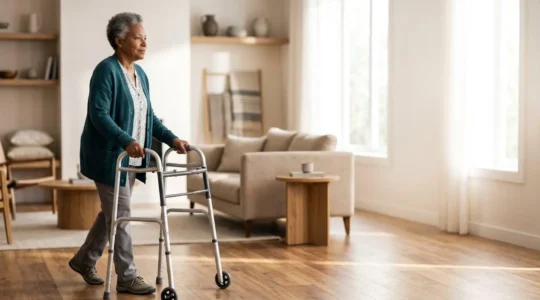
Contrary to popular belief, using a mobility aid isn’t a sign of giving up; it’s a strategic decision to prolong your active life. Inactivity is the real threat, causing significant muscle and strength loss in just a few weeks. Adapting…
Read more