
In summary:
- Relying on a single neighbor creates a single point of failure; true security comes from a structured system.
- Build an intentional “emergency pod” of three trusted neighbors to ensure someone is always available.
- Use a police-approved key safe for secure access and a “Vial of Life” for medical information, as neighbors cannot give consent.
- Foster these relationships through reciprocal value, where you contribute skills and time, not just receive help.
Living alone, with family miles away, brings a unique blend of independence and vulnerability. You cherish your space, but a quiet worry can linger: what happens in an emergency? Many well-meaning guides suggest simply “getting to know your neighbors” or exchanging phone numbers. While a friendly wave is a good start, it’s not a reliable safety system. A casual acquaintance might be on holiday, busy, or simply not equipped to help effectively when seconds count. In the US, where 28% of older adults live alone, this is a challenge that requires a more structured solution.
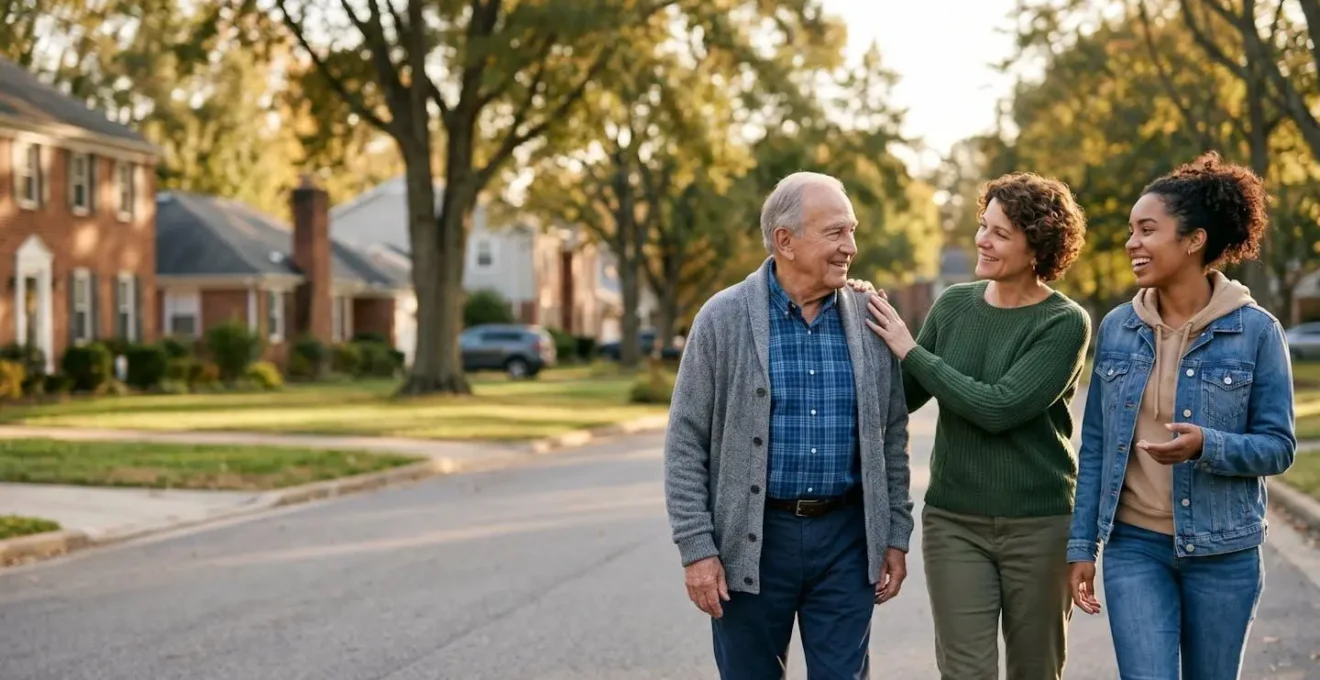
But what if the key wasn’t about knowing everyone on the street, but about building an intentional and reliable micro-community? The answer lies in moving beyond casual friendliness to create a dedicated “emergency pod.” This isn’t about having a long list of contacts; it’s about cultivating a deep, reciprocal relationship with a core group of three trusted neighbors who understand their role and have the tools to act.
This article provides a practical blueprint for building that pod. We’ll cover the legal reasons why a neighbor can’t authorize medical care, the secure methods police recommend for key access, and how to create a system of mutual support that is both resilient and respectful of your independence. It’s about creating a safety net built on purpose, not just proximity.
This guide breaks down the process into actionable steps. You will learn how to select your pod members, establish clear protocols, and implement tools that provide security and peace of mind for everyone involved.
Summary: How to build a “pod” of 3 reliable neighbors for emergencies?
- Why your neighbor cannot authorize medical care even if they have the spare key?
- Digital Safe or Hidden Rock: which access method do police recommend?
- Cat feeding or Parcel taking: how to be useful to neighbors to earn their support?
- The mistake of relying on just one neighbor who might go on holiday
- When to set up a “curtains open” signal system with the street?
- How to use the “Nominated Neighbor” scheme to filter callers?
- How to set up a village car-share scheme for the weekly shop?
- Homeshare schemes: is sharing your house with a student safe and viable in the UK?
Why your neighbor cannot authorize medical care even if they have the spare key?
In a medical crisis, the first instinct might be for a neighbor to use a spare key to let paramedics in and explain the situation. While access is crucial, a common and dangerous misconception is that a neighbor, no matter how trusted, can make medical decisions on your behalf. Legally, they have no authority to consent to or refuse treatment for you. This responsibility falls to a legally designated healthcare proxy or next of kin. Without the proper documentation, first responders are left without vital information, potentially delaying critical care.
This is where the “Vial of Life” or a similar emergency medical information packet becomes indispensable. It’s a simple system that speaks for you when you can’t. By having all your essential medical data, contact information, and advance directives clearly documented and accessible (typically on your refrigerator), you empower first responders to act swiftly and correctly. Your neighbor’s role is not to provide medical consent, but to know where this packet is and to direct emergency personnel to it. This simple preparation bridges the gap between a neighbor’s goodwill and the legal requirements of emergency medicine.
Preparing this information is the single most important foundational step in your emergency plan. It ensures that the help you receive is the help you need.
Your emergency information checklist: Preparing your “Vial of Life”
- Personal details: List your full name, date of birth, blood type, and any significant identifying marks.
- Medical history: Detail current medical conditions, significant past surgeries, and chronic illnesses.
- Medication list: Inventory all current medications, including dosage, frequency, and the prescribing doctor.
- Allergies: Clearly state all known allergies to medications, foods, or other substances.
- Contacts: Include phone numbers for your doctors, designated healthcare proxy, and immediate family members.
- Advance directives: Ensure copies of your healthcare proxy, DNR orders, or POLST forms are included and signed.
Digital Safe or Hidden Rock: which access method do police recommend?
Once your emergency information is prepared, the next question is physical access. How do your trusted neighbors or emergency services get inside if you can’t open the door? The classic “key under the mat” or inside a fake rock is the first place a burglar will look. It’s an open invitation for trouble and is strongly discouraged by law enforcement. A far more secure and recommended approach is a police-approved key safe.
These are small, robust metal boxes mounted securely to an exterior wall, opened by a combination code. Your emergency pod members are given the code, which can also be shared with 911 dispatchers in a verified emergency. This allows paramedics, police, or your neighbors to gain entry without causing expensive damage by breaking down a door. Unlike a smart lock, a mechanical key safe is not dependent on power, Wi-Fi, or a smartphone, making it a ruggedly reliable option. The key is choosing a model that is officially certified for its security.
As you can see, these devices are built for durability and security. To make the best choice, it’s helpful to compare the options directly. The following table, based on analysis from security experts, breaks down the pros and cons of common methods.
| Access Method | Security Level | Police Recommendation | Approximate Cost | Key Advantages | Main Disadvantages |
|---|---|---|---|---|---|
| Hidden Key (rock, mat, plant pot) | Very Low | Not Recommended | Free | No installation required, universally accessible | First place burglars check, easily discovered, weather exposure |
| Police-Approved Key Safe (Supra C500, Burton Keyguard XL) | High | Strongly Recommended | £60-£100 | Secured by Design certification, attack-tested, weather-resistant, used by professional care services | Requires installation (drilling into brick/concrete), code must be changed after emergency use |
| Smart Lock with App Access | High | Acceptable | £150-£300+ | Time-stamped access logs, remotely revocable, no physical key needed, temporary codes possible | Requires smartphone, battery/power dependent, technology learning curve for seniors |
| Dual-Code Lock Box (split between 2 neighbors) | Very High | Acceptable for High-Risk Cases | £60-£100 + coordination | Eliminates single point of failure, requires cooperation of two trusted parties | Complex coordination, both parties must be available simultaneously in emergency |
Cat feeding or Parcel taking: how to be useful to neighbors to earn their support?
A strong support pod is built on reciprocity, not charity. The fear of “being a burden” can prevent many seniors from asking for help. The solution is to shift the dynamic from one-way assistance to a two-way exchange of value. You have a lifetime of experience, skills, and time that are incredibly valuable to your neighbors. It’s not about matching physical tasks like for like; it’s about contributing to the community fabric in a way that feels authentic to you.
Simple acts like taking in parcels, keeping an eye on a house while a neighbor is away, or offering to water plants are universally appreciated. But you can go deeper. Are you a retired accountant who could offer a quick opinion on a tax question? A former teacher who could help a neighbor’s child with homework? Perhaps you are the “neighborhood historian,” sharing stories about the area that give new residents a sense of belonging. Your role as a stable, observant presence on the street is a form of security in itself.
The goal is to create a relationship where asking for help feels natural because you are also giving it. This builds a foundation of reciprocal value and mutual respect. Here are some ways to contribute that don’t require heavy lifting:
- Become the neighborhood information hub: Share updates from the local council, warn about recent scams, or pass on news about community events.
- Offer your professional expertise: Provide mentorship or advice in your former field, whether it’s gardening, writing, or tech.
- Provide the gift of time and listening: Offer companionship to another neighbor who may be lonely or act as a trusted ear.
- Initiate low-pressure social connections: A simple “good morning” or a comment about the weather can be the start of a meaningful connection. Hosting a coffee on your porch can create a neighborhood focal point.
- Small regular gestures: These include taking in mail or bins, feeding a pet, or keeping an eye on a property during a vacation.
The mistake of relying on just one neighbor who might go on holiday
The single biggest mistake in creating an informal support system is relying on one person. Your kindest, most reliable neighbor is still just one person. They get sick, go on holiday, have family emergencies, or may simply be unreachable when you need them most. This creates a single point of failure in your safety plan. True resilience comes from redundancy—having a system with built-in backups. This is why the “emergency pod” model is based on three people.
Your pod should have a clear communication hierarchy. Your Primary contact is the first person to call. If they don’t answer, you or your alarm service immediately move to the Secondary contact. If they are also unavailable, the Tertiary contact is the final backup. This cascading system ensures that you are never left without a potential responder. It also spreads the responsibility, making it a lighter lift for each individual and reducing the chance of burnout or pressure on one friendship.
Coordinating this requires some light planning. A shared calendar, whether physical or digital, can help track when pod members are away. A simple group chat can be used for non-urgent updates and to maintain social connection. The key is that everyone in the pod understands the system and their role within it.
Case Study: FEMA’s Primary-Secondary-Tertiary Contact Model
FEMA’s emergency planning framework, detailed on Ready.gov for older adults, emphasizes building a support network with multiple layers. The recommended model establishes a Primary contact (the closest responder), a Secondary contact (activated if the Primary is unresponsive), and a Tertiary contact (the final backup). This cascading structure, tested in community preparedness programs, dramatically reduces response times compared to single-contact systems by creating built-in system redundancy and eliminating the risk of a single point of failure.
When to set up a “curtains open” signal system with the street?
An effective emergency pod doesn’t just react to crises; it proactively monitors for them. One of the simplest yet most effective tools for this is a passive signal system. This is a pre-arranged, low-effort daily sign that indicates you are up and about. The classic example is the “curtains open” rule: you agree with your pod members that you will open a specific set of curtains by a certain time each morning, for example, 10 AM. If the curtains remain closed past that time, it’s a non-intrusive signal for a neighbor to check in, first with a phone call, and then by coming to the door.
This system is powerful because it requires no technology and respects your privacy. It’s a silent, daily “I’m okay” message to your support network. The urgency for such a system is stark. A fall can happen at any time, and you may not be able to reach a phone or press a panic button. According to the Centers for Disease Control, one in four seniors fall each year, leading to millions of emergency room visits. A passive signal system can be the difference between getting help within hours versus days.
This system should be set up as soon as your pod is formed. It should be simple, consistent, and understood by everyone involved. Other variations can include:
- Placing a specific object (like a decorative flag or potted plant) outside your door in the morning.
- Turning an outside light on in the evening and off in the morning.
- Sending a daily “good morning” text to your pod’s group chat.
The best system is one that fits seamlessly into your daily routine and is easily observable by your neighbors.
How to use the “Nominated Neighbor” scheme to filter callers?
Beyond medical emergencies, personal security is a major concern, especially with the rise of sophisticated doorstep and phone scams targeting seniors. According to 2024 fraud statistics, financial losses to fraud among those aged 60+ are in the billions. Your emergency pod can serve as a powerful shield against this threat by implementing a “Nominated Neighbor” or “Trusted Verifier” system.
The principle is simple: you establish a firm rule that you do not engage with any unsolicited callers, whether at the door or on the phone. Instead, you direct them to your Nominated Neighbor for verification. A legitimate contractor, utility worker, or charity will have no issue with this extra step. A fraudster, however, will almost always refuse and leave. This system creates a critical buffer, giving you time and space to avoid high-pressure sales tactics or outright deception.
This scheme empowers your neighbor to act as a gatekeeper. They can check credentials, look up company information, and confirm that a visit is legitimate before anyone is allowed inside your home. You can even establish a simple password or duress code with your pod for an extra layer of security. This strategy effectively outsources the stressful task of vetting strangers to your trusted support network.
To implement this, you can follow a clear set of steps:
- Establish a firm rule: Practice saying, “I don’t make decisions at the door. Please contact my neighbor [Name] at [Number] to verify your business.”
- Use visible signage: A small, polite sign on your door stating, “We do not buy from unsolicited callers. All inquiries must be verified by our Nominated Neighbor,” can deter many scammers.
- Create a duress code: A simple, pre-agreed password that a legitimate visitor must provide.
- Keep a visitor log: Inform your pod of any expected service appointments so they know who to expect.
- Extend the rule to phone and email: Never give financial information over the phone. Use the same line: “Please contact my son/neighbor to verify this request.”
How to set up a village car-share scheme for the weekly shop?
For many seniors, giving up driving can feel like a loss of independence, especially when it comes to essential errands like the weekly grocery shop. An emergency pod can evolve to address this practical need by organizing a simple, informal car-share scheme. This not only solves a logistical problem but also strengthens community bonds by turning a solitary chore into a social outing.
Setting this up doesn’t require a complex app or formal organization. It can start small, right within your three-person pod or by expanding slightly to include one or two other interested neighbors on your street. The key is to keep it simple, fair, and transparent. The goal is a reliable system that everyone feels good about participating in, whether they are a driver or a passenger.
Here’s a simple, three-step approach to get a small-scale car-share going:
- Gauge Interest and Establish the Need: Start a conversation with your pod members. You might say, “I’m finding the weekly trip to the supermarket a bit of a hassle. Would anyone be interested in going together or taking turns driving?” Find out who needs a ride and who is willing to drive. Agree on a preferred shopping day and time that works for most people.
- Create a Simple Schedule: A basic weekly rota is often all that’s needed. You can use a shared group chat (like WhatsApp) or a physical calendar to coordinate. For example, “Mary drives the first week of the month, John drives the second,” and so on. This ensures the responsibility is shared fairly.
- Set Clear and Simple Ground Rules: To avoid misunderstandings, agree on a few basics from the start. This should include how to handle fuel costs (e.g., passengers contribute a small, fixed amount each trip), how much notice is needed to cancel, and a general understanding of flexibility if someone has an appointment.
This collaborative approach turns a potential challenge into another example of reciprocal value. The driver gets some company and a small contribution for fuel, and the passengers get a reliable ride and social interaction.
Key takeaways
- The goal is not just friendship, but a resilient system; build a “pod” of three neighbors for redundancy.
- Physical access must be secure. Use a police-approved key safe and never hide a key.
- Strong relationships are built on reciprocal value. Identify the skills and time you can offer your neighbors.
Homeshare schemes: is sharing your house with a student safe and viable in the UK?
As you consider the best way to build a support system, the emergency pod of neighbors offers a fantastic, low-cost, and high-privacy solution. However, for those who may need more consistent, daily companionship or light help around the house, another model exists: homesharing. Particularly in the UK, Homeshare schemes have become a formal and well-regarded option. These programs match a senior householder with a younger person (often a student or key worker) who is looking for affordable accommodation.
In a typical Homeshare arrangement, the younger person provides around 10-15 hours a week of companionship and practical help—such as cooking a few meals, running errands, or simply being present in the house overnight—in exchange for a room at a heavily reduced rent or for free. Unlike the informal neighbor pod, this is a formal living arrangement facilitated by an accredited organization that handles vetting, background checks, and contracts. It provides a constant presence in the home, which can be a great comfort.
However, this comes with a significant trade-off in privacy. You are no longer living alone but sharing your home with someone else. This requires a higher level of commitment and adjustment than the neighbor pod model. The decision between these two options depends entirely on your personal needs for support, your desire for privacy, and your comfort level with cohabitation. To help clarify this choice, the following table compares the two approaches.
| Factor | Neighbor Pod (3 reliable neighbors) | Homeshare (live-in companion/student) |
|---|---|---|
| Monthly Cost | Free (reciprocal relationship) | Reduced rent or free accommodation in exchange for companionship/light tasks |
| Privacy Level | High – maintains complete home privacy | Low to Medium – shares living space with another person |
| Level of Commitment Required | Low – periodic check-ins and emergency availability | High – daily cohabitation and regular interaction |
| Type of Support Provided | Emergency response, occasional errands, social check-ins | Daily companionship, meal preparation, household tasks, consistent presence |
| Social Interaction Frequency | Variable – as needed or desired | Constant – daily shared meals and living spaces |
| Best Suited For | Independent seniors needing backup emergency system and community connection | Seniors requiring more consistent daily support and regular companionship |
| Background Checks Required | Informal trust-building over time | Formal background checks, references, mediated matching process (via accredited program) |
| Legal Agreement | Informal verbal agreement or simple written emergency protocol | Formal contract outlining duties, boundaries, notice periods, conflict resolution process |
For most independent seniors, the emergency pod is the perfect first step. It enhances safety without compromising autonomy. Start today by identifying one potential member for your support pod. A simple conversation is the first step towards building a safer, more connected life in your own home.