
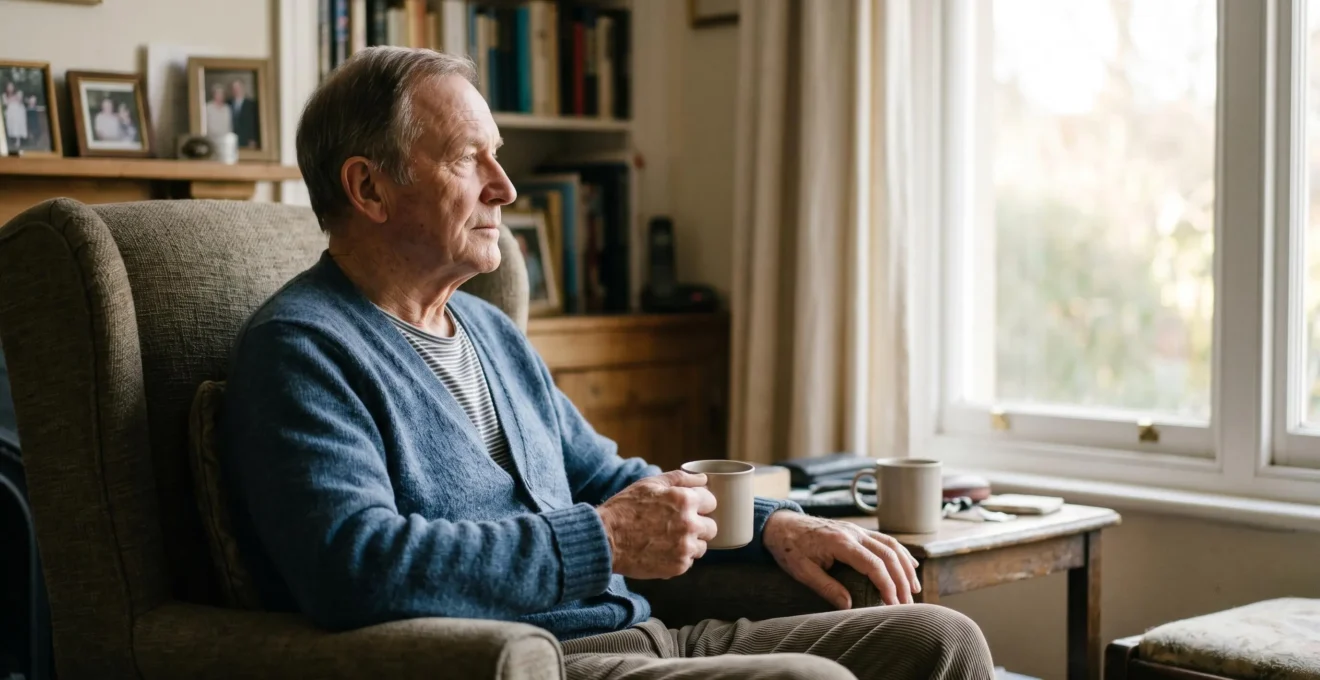
Contrary to common belief, the profound impact of losing a spouse is not just an emotional trial; it is a measurable physiological event known as the “widowhood effect.” This condition actively dysregulates your body, increasing risks of illness and functional decline. This guide moves beyond platitudes to provide a clinical framework, treating grief’s physical symptoms with concrete, evidence-based strategies to help you regain control over your health and build a stable future.
The quiet in the house can be deafening. After losing a spouse, the world shrinks, and the most familiar spaces can feel alien. You may have been told that grief is a process, that you need to feel your emotions, and that time will heal. While true, this advice often fails to address a critical reality: the deep, tangible, and sometimes dangerous physical toll that bereavement takes on your body. This is the “widowhood effect,” a phenomenon where the surviving spouse, particularly in later life, experiences a sharp decline in their own health.
The common counsel to “stay busy” or “lean on friends” can feel hollow when you lack the basic energy to get out of bed, let alone prepare a meal for one. The problem isn’t a lack of desire to feel better; it’s that grief initiates a systemic cascade of physiological stress. It’s not just in your head; it’s in your cells, your heart, and your nervous system. But what if we stopped treating grief as only an emotional wound and started addressing it as a clinical condition with manageable symptoms?
This article provides that shift in perspective. We will not focus on platitudes. Instead, we will explore the tangible, biological mechanisms of the widowhood effect and arm you with a practical, evidence-based action plan. We will examine why loneliness can be a clinical risk factor, how to address the functional decline that stops you from completing daily tasks, and how to use simple, powerful techniques to regulate your body’s stress response. This is a guide to navigating the physical reality of grief and actively protecting your health when you feel most vulnerable.
To help you navigate this complex topic, this guide is structured to address the most pressing challenges of widowhood. From understanding specific risks to implementing practical coping mechanisms, each section offers clinical insights and actionable steps.
Summary: A Clinical Guide to Navigating the Widowhood Effect
- Why men are more at risk of social isolation after losing a wife?
- How to find the motivation to cook when the “table is empty”?
- Cruse vs Informal Coffee: when do you need professional grief support?
- The mistake of leaving the deceased’s room untouched for years (preventing healing)
- How to handle the first Christmas or Birthday alone without collapsing?
- Why loneliness is as damaging as smoking 15 cigarettes a day for UK seniors?
- How to use “box breathing” to lower blood pressure in 5 minutes?
- The “retirement void”: how to find purpose when the job title goes?
Why men are more at risk of social isolation after losing a wife?
While grief is universal, its social consequences often differ by gender. For many older men, their wife was the primary “social architect” of their lives—managing the social calendar, maintaining friendships, and organizing family gatherings. When she is gone, the entire support structure can collapse, not just emotionally but logistically. This isn’t a reflection of a lack of love for friends or family, but often a lack of practice in the mechanics of social maintenance. The skills of reaching out, making plans, and being vulnerable may be underdeveloped.
This leads to a rapid and dangerous slide into social isolation. The data is stark: research demonstrates that after a spouse’s death, loneliness increased to around 50% for men approximately a year into widowhood. This isolation is not passive; it is an active risk factor for both mental and physical decline. Men are often more reluctant to admit loneliness or seek help, viewing it as a personal failing rather than a predictable consequence of their loss.
The clinical approach is not to simply “try harder” but to rebuild social connections through structured, task-oriented engagement. The goal is to create routines where social interaction is a natural byproduct, not the primary, pressure-filled objective. This can involve joining groups focused on activities rather than talk, such as Men’s Sheds associations, volunteer repair cafes, or community gardening projects. The key is to find an “anchoring social routine”—a fixed, non-negotiable weekly activity that guarantees human interaction and begins to rebuild social muscle memory, one small, low-stakes connection at a time.
How to find the motivation to cook when the “table is empty”?
The simple act of preparing a meal can become a monumental task after losing a partner. The empty chair at the table is a constant reminder of the loss, and the joy of cooking for two is replaced by the seemingly pointless chore of cooking for one. This lack of motivation is not laziness; it’s a symptom of a profound physiological process. Grief triggers a chronic stress response in the body, leading to what is known as grief-induced inflammation. This biological state is directly linked to depression, fatigue, and a loss of appetite.
Recent research confirms this connection, showing that widowhood significantly increases depression and inflammation markers. However, the same studies reveal a powerful tool for intervention: nutrition itself. An article published in *Frontiers in Public Health* showed that interventions targeting physiological stress responses—including structured nutrition with anti-inflammatory foods—can mitigate the biological impact of grief. Maintaining a routine of eating, even when you don’t feel like it, is a clinical intervention to protect your brain and body.
The solution, therefore, is not to “force” yourself to cook elaborate meals. It is to reframe cooking as a low-energy, functional act of self-care. This is where the concept of component-based batch cooking becomes a lifeline. Instead of making full meals, spend one short session a week preparing simple components: roasted vegetables, cooked grains like quinoa or rice, and grilled chicken or fish. Store these in individual portions.
As you can see, this approach transforms mealtime. Instead of a daunting task, it becomes a simple assembly job. You can combine different components for a varied, nutritious meal in minutes. This strategy does two crucial things: it ensures your body gets the nutrients it needs to fight inflammation and fatigue, and it provides a small, manageable sense of accomplishment, which is a powerful antidote to the helplessness that grief can impose.
Cruse vs Informal Coffee: when do you need professional grief support?
Friends and family are an invaluable source of comfort, and a casual coffee with a trusted confidant can be a lifeline. However, it is clinically vital to recognize the distinction between informal social support and professional grief counseling. They serve different, though equally important, functions. Informal support provides empathy and a sense of connection, but it is not equipped to address the deep, structural patterns of complicated grief or the functional impairment that can accompany profound loss.
Professional support becomes necessary when grief moves beyond emotional pain and begins to actively disable your ability to function in daily life. As renowned grief expert William Worden notes in his book, “Grief Counseling and Grief Therapy,” while most people can manage, “for some, the experience of distress is so extreme or prolonged that they seek the help of a professional.” He identifies an early, high level of distress as a key predictor of later, more severe problems. The question is, how do you know if your distress level is in that high-risk category?
The answer lies in a frank assessment of your daily functioning. It’s not about how sad you feel, but what you are no longer able to do. A professional counselor can help you identify destructive patterns and build concrete coping strategies that informal conversations cannot provide. This is especially true if you are experiencing physical symptoms like insomnia or panic attacks, or if you find yourself completely unable to manage basic household tasks.
Functional Impairment Self-Assessment
- Environmental Avoidance: Are you avoiding certain rooms in your house for more than a month? (Indicates environmental grief paralysis)
- Decision-Making Impairment: Have you stopped opening mail related to finances or home maintenance for several weeks? (Indicates decision-making impairment)
- Self-Care Breakdown: Are you neglecting personal hygiene or home cleanliness tasks you previously managed?
- Functional Disability: Do you struggle to complete everyday tasks like grocery shopping, laundry, or meal preparation?
- Complicated Grief Indicators: Are you experiencing persistent physical symptoms like insomnia, loss of appetite, or panic attacks lasting beyond 3 months?
If you answered ‘yes’ to two or more of these questions, it is a strong clinical indicator that professional grief counseling could provide essential tools to help you regain function and prevent a deeper decline.
The mistake of leaving the deceased’s room untouched for years (preventing healing)
After a loss, the instinct to preserve everything exactly as it was can be overwhelming. A spouse’s room, office, or workshop can become a sacred space, a tangible connection to the person who is gone. Keeping it untouched feels like an act of love and remembrance. Clinically, however, this act of preservation can become a significant obstacle to healing, transforming a home from a place of comfort into a static, unchanging museum of grief. This is what can be termed environmental grief paralysis.
When a space is frozen in time, it constantly pulls you back to the past, preventing your brain from adapting to the reality of the present. It becomes a daily, visceral reminder of the absence, reinforcing the pain rather than allowing for the integration of memory into a new life. Every time you walk past that closed door, your nervous system may register a micro-hit of stress and sadness, keeping you in a state of chronic emotional activation. The home ceases to be a functional living space and instead becomes a shrine, and you become its lonely curator.
The therapeutic counter-strategy is not to erase the memory, but to consciously and respectfully repurpose the space for a forward-looking function. This is a powerful healing modality. The physical act of changing a room provides a tangible project that balances honoring the past with creating a sustainable future. Documented clinical observations show that bereaved individuals who transform a spouse’s space into something new—a home gym, a video call station to connect with grandchildren, a hobby workshop—report significantly better psychological adjustment.
One widower, for instance, turned his late wife’s sewing room into a small home gym. He reported that the project helped him combat the physical decline associated with his grief, and he felt he was honoring her creative spirit by channeling it into his own new, life-affirming pursuit. The goal is to evolve the meaning of the space from “where she is not” to “where my new life can grow,” allowing the memory of the person to be a foundation for the future, not an anchor to the past.
How to handle the first Christmas or Birthday alone without collapsing?
The lead-up to the first major holiday or anniversary after a spouse’s death is often filled with a unique kind of dread. These days, once sources of joy and connection, now loom as painful milestones of absence. The pressure to feel festive, or even to just “get through it,” can be immense and isolating. The clinical truth is that anticipatory grief—the dread you feel beforehand—is often more debilitating than the day itself. The key to navigating it is not to hope you won’t collapse, but to proactively build a structure that makes collapse less likely.
Instead of leaving the day to chance, the most effective strategy is to create a “First Holiday Resilience Kit.” This involves pre-planning and giving yourself explicit permission to feel whatever you feel, while having concrete options at your fingertips. The goal is to reduce decision fatigue on a day when you will be at your most vulnerable. This means having a Plan A, a Plan B, and even a Plan C.
Plan A might be a low-pressure social engagement, like a casual meal with a trusted friend who understands you may need to leave early. Plan B is for a quiet day at home, but one that is structured for comfort—a pre-selected movie, a high-quality takeout meal ordered in advance, a scheduled video call. Plan C is the escape hatch: total permission to do something completely different and non-traditional, like going to the cinema all day or volunteering. The power lies in making these decisions *before* the day arrives.
Part of this resilience kit is also about environmental control. Decide in advance what you can handle. Will you display one meaningful photograph, or do you need to remove all triggers for this first year? Maybe you will create one small, manageable new tradition, like lighting a single candle in a quiet moment, as pictured above. There is no right answer, but making a conscious choice puts you back in control. Committing to surviving just the 24 hours—and giving yourself grace—is the most compassionate and clinically sound approach.
Why loneliness is as damaging as smoking 15 cigarettes a day for UK seniors?
The phrase “dying of a broken heart” is often dismissed as poetic, but clinically, it points to a devastating reality. Chronic loneliness, a frequent consequence of widowhood, is a public health crisis with a mortality risk comparable to well-known physical dangers. The comparison to smoking is not hyperbole; it is a data-driven conclusion. Public health data confirms that prolonged loneliness is associated with an approximate 26% increase in the risk of premature death, an impact on par with smoking 15 cigarettes daily and more dangerous than obesity or physical inactivity.
But how does an emotional state like loneliness translate into such a potent physical threat? The mechanism is a dangerous behavioral and physiological cascade. A 2024 study from the Regenstrief Institute found that chronic loneliness leads to cognitive fog. This mental cloudiness dramatically increases the risk of critical household errors: forgetting to turn off the stove, missing doses of essential medication, or failing to recognize the signs of a gas leak. The risk isn’t abstract; it’s woven into the fabric of daily life.
The cascade begins with simple things. The feeling of “no one to eat with” leads to poor nutrition and skipped meals. This results in physical weakness, which in turn elevates the risk of falls—a leading cause of morbidity in older adults. This downward spiral shows how loneliness isn’t just a feeling of sadness; it’s a condition that actively dismantles a person’s ability to care for themselves safely. It creates tangible hazards within the one place a person should feel most secure: their own home.
This evidence elevates loneliness from a social issue to a clinical priority. It must be discussed with the same urgency as smoking cessation or managing high blood pressure. The antidote involves creating an environment that fosters casual social opportunities. Simple modifications, like placing a comfortable chair on the front porch to signal openness or keeping tea supplies easily accessible for a neighbor’s impromptu visit, are not trivial decorations. They are strategic, environmental interventions designed to break the cycle of isolation and mitigate a serious health risk.
How to use “box breathing” to lower blood pressure in 5 minutes?
In the throes of grief, the body is often in a constant state of “fight or flight.” Your heart races, your breathing is shallow, and your blood pressure rises. This is your sympathetic nervous system on overdrive, a physiological response to extreme emotional stress. While you can’t simply will this response away, you can use a powerful, clinically-proven tool to manually down-regulate it: controlled breathing, specifically a technique known as box breathing.
This is not a new-age wellness trend; it is a neurological tool used by everyone from Navy SEALs to clinical therapists to manage acute stress. Box breathing works by directly stimulating the vagus nerve, the main component of your parasympathetic nervous system—the body’s “rest and digest” system. As the SonderMind Clinical Research Team explains, “When the vagus nerve is activated, it sends a signal to the brain to slow the heart rate, lower blood pressure, and promote a sense of calm.” A 2023 study published in *Cell Reports Medicine* confirmed that breathwork practices like this produced measurable reductions in systolic blood pressure and greater improvements in mood than mindfulness meditation alone.
The technique is profoundly simple, which is its greatest strength. You can do it anywhere, anytime, without any equipment.
- Inhale slowly through your nose for a count of 4.
- Hold your breath for a count of 4.
- Exhale slowly through your mouth for a count of 4.
- Hold your breath for a count of 4.
Repeat this cycle for 2-5 minutes. The key is the slow, rhythmic pace and the holds, which prevent the hyperventilation common in anxiety. The real power of this tool for a widow or widower is to “habit stack” it onto common grief triggers. For instance, you can practice one round before opening the mailbox if you’re anxious about bills, or for two minutes in your car before entering your empty home. By repeatedly linking the technique to a trigger, you create an automatic, conditioned response, giving you a tangible sense of control over your body’s reaction to grief.
Key Takeaways
- Recognize that the “widowhood effect” is a real, physiological condition. Grief impacts your body’s inflammation levels, blood pressure, and cognitive function.
- Combat social isolation proactively by joining task-oriented groups where connection is a byproduct, not the main goal. Rebuilding social muscle memory is a clinical necessity.
- Use simple, powerful tools like box breathing and structured nutrition (batch cooking) as direct interventions to regulate your nervous system and fight the physical symptoms of grief.
The “retirement void”: how to find purpose when the job title goes?
For many, the loss of a spouse coincides with another profound loss: the loss of professional identity through retirement. This double-void can be devastating. A career provides structure, a sense of purpose, social connection, and a clear role. When both that and a lifelong partnership disappear simultaneously, the question “Who am I now?” can be overwhelming and paralyzing. This isn’t just about being “bored”; it’s about a fundamental crisis of identity and purpose.
The compounding effect of these two losses requires a structured, forward-looking solution that provides meaning without the pressures of employment. Gerontologists and grief researchers have found immense value in the concept of a “Legacy Project.” This framework involves transforming the home or daily routine into an operational base for a meaningful project, often one that honors the late spouse’s values or passions while utilizing the survivor’s own career skills.
This is not a hobby; it is work with a purpose. Documented examples from clinical settings show the power of this approach. One widower, using the financial planning skills from his career, established a small scholarship in his wife’s name for local nursing students, her former profession. Another, whose wife had been a passionate gardener, took on the project of completing her extensive garden designs and then began teaching neighborhood children about native plants. He combined her passion with his own newfound purpose, creating a living tribute.
These Legacy Projects provide the essential elements of work: daily tasks, clear goals, measurable progress, and a reason to get up in the morning. They create a bridge between the past and the future, allowing the survivor to maintain a connection to their spouse’s values while building a new, independent identity. It transforms the “retirement void” from an empty space into a fertile ground for new growth, driven by a purpose that endures.
The journey through grief is not about “getting over” the loss, but about learning to carry it in a way that allows for a new life to grow around it. The first step is recognizing that you have the power to influence your own health and well-being, even on the hardest days. Begin by choosing one small, manageable action from this guide—whether it’s trying box breathing for two minutes, preparing one component for a future meal, or simply acknowledging that what you’re experiencing is a real, clinical condition. That single step is the start of reclaiming your future.