
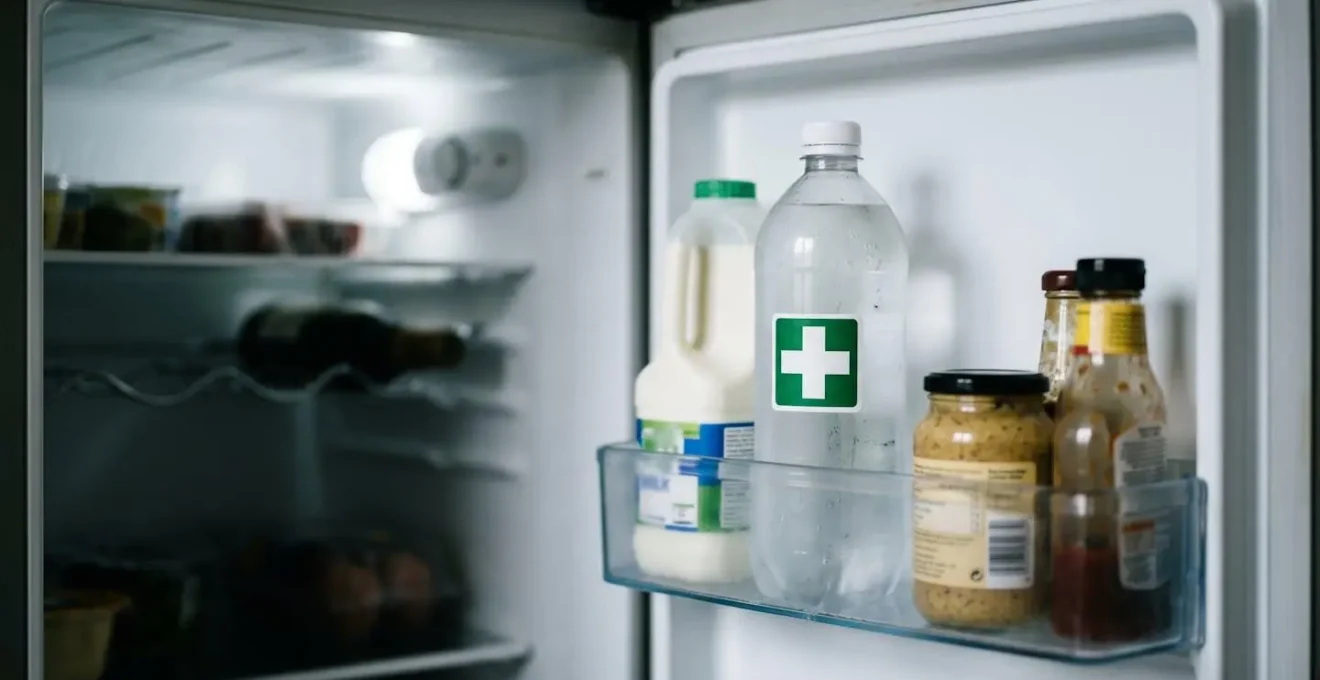
Contrary to popular belief, the ‘Message in a Bottle’ is not just a handy place for your medical notes; it’s the single source of truth that dictates the decisions paramedics make in the first five minutes of an emergency.
- Your DNACPR form is useless in a drawer; it must be in the bottle to be legally valid in a crisis.
- A locked door will be forced, costing hundreds, if we don’t have a key safe code in that bottle.
- An outdated medication list in the bottle is more dangerous than no list at all, risking life-threatening drug interactions.
Recommendation: Use this guide to audit your emergency prep not as a ‘nice-to-have,’ but as a critical system designed to prevent catastrophic failure when seconds count.
In an emergency, chaos is the default. When we, as paramedics, step into your home, we are looking for order in that chaos. We’re searching for a clear, unambiguous signal that tells us who you are, what you need, and what you want. People often think preparing for an emergency is about having a first aid kit or a charged phone. Those things help, but they are not the core of the problem. The real challenge is bridging the information gap when you are unable to speak for yourself. That’s where most people’s preparation falls apart.
Many have heard of the Lions Message in a Bottle scheme. It’s seen as a simple, clever idea. But treating it as just a ‘good idea’ is the first mistake. From our perspective on the front line, that bottle isn’t just a container; it’s a critical decision-making tool. It’s the difference between a smooth, effective response and a series of desperate gambles. The difference between respecting your wishes and potentially causing unintended harm. The problem isn’t the bottle; it’s the common, seemingly minor errors in how it’s used that have major, real-world consequences.
This isn’t another guide telling you to fill out a form. This is a look behind the curtain. We will deconstruct the emergency response chain of survival, link by link. We’ll show you why a small piece of paper in the right place is more valuable than a state-of-the-art smartphone, why a cheap key safe could be your most expensive mistake, and how to eliminate the information friction that costs us precious seconds and puts your health at risk. This is about turning your bottle from a passive document into an active lifesaver.
This guide walks you through the critical decision points we face in an emergency and shows you how to provide the answers in advance. By understanding the ‘why’ from a paramedic’s perspective, you can ensure your preparations are not just present, but effective.
Summary: A Paramedic’s Guide to Emergency Preparedness at Home
- Why your DNACPR form must be on the fridge, not in a drawer?
- Mobile contact vs Wallet card: which does the ambulance crew check first?
- Key Safe vs Forcing the Door: the repair cost of not having a backup plan?
- The mistake of having an outdated prescription list that causes drug interactions
- What to pack in a “Hospital Go-Bag” so you aren’t stuck in A&E in pyjamas?
- Why a Home-only alarm is useless for an active gardener?
- CO detector vs Temperature sensor: ensuring the heating hasn’t failed in winter?
- Electronic Repeat Dispensing (eRD): How to automate your medication supply?
Why your DNACPR form must be on the fridge, not in a drawer?
Let’s be direct. If you have a Do Not Attempt Cardiopulmonary Resuscitation (DNACPR) decision, and we find you in cardiac arrest, we have a legal and ethical duty to begin resuscitation unless we see the original, signed form. A note in your diary, a mention from a neighbour, or a form locked in a filing cabinet is completely useless. In the heat of the moment, a drawer is a black hole. We are trained to look in one specific place: the fridge. The green stickers provided with the Message in a Bottle kit on your door and fridge are the signal. The bottle in the fridge door is the target. This isn’t a matter of convenience; it is a legal decision point.
The Lions Message in a Bottle scheme is the recognised national standard. Its success is staggering; there are more than 6 million kits distributed across the UK, meaning emergency services everywhere know the drill. When we see the sticker, we don’t have to guess. We know exactly where to find the single source of truth for your medical wishes. Without that form, in that specific place, we will start CPR. It’s that simple. To ensure your wishes are respected, the form cannot just be in your home; it must be in the one location every emergency responder is trained to check first.
Think of it as the ultimate contingency plan. Placing the DNACPR form inside the bottle and the bottle in the fridge removes all ambiguity at the most critical time. It allows us to honour your decision with confidence and without delay, ensuring your end-of-life wishes are followed precisely as you intended. Anything less introduces a high-stakes gamble you don’t want us to take.
Mobile contact vs Wallet card: which does the ambulance crew check first?
When we find a patient who is unconscious, our primary assessment is a race against time. We are looking for immediately life-threatening issues and any available medical information. Many people assume we will look for a mobile phone and check the ‘In Case of Emergency’ (ICE) contact. While that’s a modern fallback, it is not our first action. Phones can be locked, broken in a fall, or have a dead battery. Accessing the ICE or medical ID feature introduces information friction—it takes time and is not always reliable.
Our hands-on assessment involves a physical check. We check pockets and wallets for physical, tangible clues. A standardised medical alert card or a piece of jewellery is the fastest signal. It’s immediately visible and accessible. This is why a simple, low-tech wallet card often beats a high-tech smartphone in the first 30 seconds of an emergency. It provides the most critical information—like “Diabetic” or “Allergy to Penicillin”—without requiring any power or passwords. The priority is always what is fastest and most reliable.
This table, based on real-world paramedic practice, illustrates the hierarchy of information access. It shows why the physical, immediate methods are prioritised over digital ones in the initial moments of an emergency. The Message in a Bottle is the gold standard at home, but a wallet card is its essential companion when you’re out.
| ID Method | Access Time | Reliability When Unconscious | Information Detail | Limitations |
|---|---|---|---|---|
| Wallet Card | Immediate (5-10 seconds) | High – Physically accessible | Basic medical info, emergency contacts | May be outdated; limited space |
| Medical Alert Jewelry | Immediate (0-5 seconds) | Highest – Always visible | Very limited (condition only) | Minimal detail; requires follow-up |
| Smartphone Lock Screen Medical ID | Fast (10-20 seconds) | Medium – Phone may be damaged/locked | Comprehensive medical history, contacts, allergies | Requires phone to be functional and found |
| Legacy ‘ICE’ Contact | Slow (30+ seconds) | Low – Requires unlocking phone | Contact only, no medical data | Outdated method; phone must be unlocked |
| Message in a Bottle (at home) | Fast at home (20-30 seconds) | High at home location | Full medical history, photo ID, DNACPR | Only effective at registered address |
Key Safe vs Forcing the Door: the repair cost of not having a backup plan?
If we arrive at your home and you are unable to open the door, we have two options: find a key or force entry. There is no third option. Forcing a door is our last resort—it’s destructive, expensive, and leaves your home insecure. The average cost of repairing a forced door can run into hundreds of pounds, a significant and avoidable expense. A police-approved key safe is the definitive solution, but only if we know the code. The single source of truth for that code should be one place: on the form inside your Message in a Bottle.
Choosing the right key safe is not a place to cut corners. There’s a significant difference in security and price, with budget models costing £20-£40 vs £70-£190 for police-approved safes. The cheaper option might seem tempting, but it can lead to a devastating contingency failure, not just in an emergency, but with your home security and insurance.
Not all key safes are created equal, and using a non-approved model can have dire financial consequences beyond the simple risk of a break-in. This is a classic example of where the cheapest option becomes the most expensive mistake.
Case Study: The Insurance Invalidation Trap
UK Care Advice highlighted a critical insurance trap in their 2026 analysis: Installing a non-police-approved key safe on your front wall can invalidate home insurance policies. If a burglar removes a budget safe and uses the key to enter, insurers may refuse claims because there was technically no ‘forced entry.’ The article emphasizes the LPS 1175 certification as the ‘Golden Rule’ for front door key safes, demonstrating that the cheapest option can become the most expensive mistake when insurance protection disappears.
The lesson is clear: invest in a police-approved safe and put the code in your Message in a Bottle. It protects your property from damage by us, secures your home against intruders, and ensures your insurance remains valid. It turns a potential crisis into a smooth, non-destructive entry.
The mistake of having an outdated prescription list that causes drug interactions
Of all the mistakes you can make with your emergency information, an outdated medication list is the most dangerous. In an emergency, we may need to administer drugs. If your list is wrong—showing a medication you’ve stopped, or missing a new one—we risk causing a serious, potentially fatal, adverse drug interaction. We trust the information in that bottle implicitly. A wrong list is a hidden trap. The scale of this problem is significant; one study found that 31.7% of elderly patients had drug interactions detected during medication reviews.
Your prescription list is a living document. It changes. The only way to ensure it remains accurate is through a regular, formal review process. Simply scribbling out an old drug is not enough. You need a systematic check to ensure all prescriptions, over-the-counter medicines, and even supplements are accounted for. This is not just about writing a list; it’s about verifying it with a professional who understands the complex pharmacology involved.
The most effective method for this is the “Brown Bag Review.” It’s a simple, powerful process that turns a potential point of failure into a robust safety check. It ensures the medication list in your bottle is not just a list, but a verified, accurate, and trustworthy document that we can use to make safe decisions about your care.
Your Action Plan: The Brown Bag Medication Review
- Schedule a quarterly “Brown Bag Review” appointment with your community pharmacist; many offer this for free.
- Gather ALL medications into one bag: prescriptions, over-the-counter drugs, vitamins, and herbal supplements.
- Bring the physical medication boxes and bottles, not just a written list, for accurate identification.
- Allow the pharmacist to review each medication for potential interactions, duplications, and appropriateness.
- Receive a newly printed, verified medication list and immediately place it in your Message in a Bottle.
What to pack in a “Hospital Go-Bag” so you aren’t stuck in A&E in pyjamas?
When you are taken to hospital in an emergency, it’s often a one-way trip with little warning. You leave with what you’re wearing, and that’s it. Being stuck in an Accident & Emergency department, or later on a ward, without basic personal items can be disorienting and distressing. A pre-packed ‘Hospital Go-Bag’ is a simple act of forward-thinking that makes a huge difference to your comfort and dignity. This isn’t a holiday suitcase; it’s a small, grab-and-go bag with the absolute essentials to get you through the first 24-48 hours.
The bag should be kept somewhere obvious and accessible—next to the front door or in your bedroom. Let a family member or trusted neighbour know where it is. When we arrive, telling us “the green bag by the door is my hospital bag” is a clear, actionable instruction that we can follow. It removes one more piece of stress from a chaotic situation and ensures you arrive at the hospital with the necessities.
Think practical, not comprehensive. The goal is comfort and function. Here are the non-negotiable items to include:
- Updated Medication List: A spare copy of the same list that’s in your Message in a Bottle.
- Contact Details: A written list of key family members or friends’ phone numbers. Do not rely solely on your mobile phone.
- Comfortable Clothing: A change of underwear, socks, and a comfortable tracksuit or nightwear that is easy to put on and take off.
- Basic Toiletries: A small toothbrush, toothpaste, comb/brush, and wet wipes.
- Footwear: A pair of non-slip slippers or comfortable shoes. Hospital floors can be cold and slippery.
- A Small Amount of Cash: For vending machines or a hospital newspaper. Avoid valuables.
- Hearing Aids / Glasses: If you use them, have a spare case ready to put them in.
This bag is your personal support system. Having it ready means that if an unplanned hospital stay occurs, you retain a degree of control and comfort in an otherwise unpredictable environment. It’s a small step that provides immense practical and psychological relief.
Why a Home-only alarm is useless for an active gardener?
A personal alarm is a fantastic safety net, but only if it works where you need it. A common point of failure we see is a mismatch between a person’s lifestyle and their alarm system’s capability. The standard, home-based alarm system relies on a radio frequency link between the pendant you wear and a base unit plugged into your phone line. This is great if you spend all your time indoors, but it has a finite range. The moment you step outside to do some gardening, fetch the bins, or speak to a neighbour, you can easily walk out of its coverage area.
The technical limitations are stark. The 800-1,400 feet typical range from the base station sounds like a lot, but this is a “line of sight” measurement in ideal conditions. Walls, furniture, and other electronic devices can drastically reduce that range. For an active person, a home-only system provides a false sense of security. You could have a fall at the bottom of the garden, press the button, and nothing will happen. You are in a coverage blackspot, and the vital link in your chain of survival is broken.
For anyone who spends time outdoors or regularly leaves the house, a GPS-based system is not a luxury; it’s a necessity. These devices use the mobile phone network and GPS satellites to provide coverage anywhere you can get a mobile signal. This is the crucial difference between a system that protects your house and a system that protects you.
| System Type | Coverage Area | Technology | Best For | Typical Cost Difference |
|---|---|---|---|---|
| Home-Based Radio Frequency | 300-1,400 feet from base unit | Radio link to home base station | Primarily indoor users, limited mobility | Standard pricing |
| GPS Mobile System | Nationwide (anywhere with cellular coverage) | Cellular network + GPS satellite | Active seniors, gardeners, daily outings | +£10-15/month typically |
| Hybrid System | At home (via base) + away (via GPS) | Both radio frequency and cellular | Best of both: home and community activities | +£5-10/month vs GPS-only |
CO detector vs Temperature sensor: ensuring the heating hasn’t failed in winter?
In winter, a home can become a silent threat. We attend far too many incidents where an elderly person has become dangerously ill not from a sudden event like a fall, but from a slow, creeping environmental failure. The two biggest culprits are carbon monoxide (CO) leaks from faulty appliances and hypothermia from a failed heating system. While a CO detector is a legal requirement in many places and an absolute essential, it only protects against one of these threats. It will not tell you if the boiler has cut out and the temperature in the living room has dropped to a life-threatening level.
Hypothermia in the home is insidious. It can develop over days as the body’s core temperature slowly drops. The person may not even realise they are in danger, becoming confused and lethargic. This is where a modern, connected temperature sensor becomes a vital part of the home safety ecosystem. It’s not just a thermometer; it’s an active monitoring tool. By setting a low-temperature alert, family or caregivers can be automatically notified of a potential crisis before it becomes a 999 call. This proactive alert allows for intervention—a welfare check, a call to a heating engineer—long before the situation becomes critical.
The ideal setup combines both technologies, preferably in smart devices that can send alerts to a mobile phone, not just make a noise in the house. A beeping alarm is useless if no one is conscious to hear it. Here’s a practical checklist for setting up this environmental safety net:
- Install Smart Sensors: Use a connected temperature sensor in the main living area and a connected CO detector near fuel-burning appliances.
- Set Alert Thresholds: Configure a low-temperature alert for 16°C (61°F) to trigger an immediate welfare check. A higher “warning” alert at 18°C (64°F) can provide an earlier heads-up.
- Configure Notifications: Ensure alerts are sent to the smartphones of designated family members or caregivers.
- Establish a Protocol: Decide in advance who will respond to an alert and what steps they will take. Who checks first? Who is the backup contact?
- Test Regularly: Test the system monthly to ensure the sensors, connection, and notification chain are all working correctly.
By monitoring the environment as well as the person, you create a much more resilient safety system. You are no longer just waiting for a button to be pushed; you are actively looking for the warning signs of a developing crisis and acting before it’s too late.
Key takeaways
- Your emergency information is not a passive document; it’s an active tool that dictates paramedic decisions.
- Small mistakes in preparation, like an outdated list or a key safe code in the wrong place, have major real-world consequences.
- The goal is to eliminate “information friction”—any delay or ambiguity that slows down our ability to provide care.
Electronic Repeat Dispensing (eRD): How to automate your medication supply?
Managing multiple repeat prescriptions can be a significant source of stress and potential error. Forgetting to order a repeat, running out of a critical medication, or making unnecessary trips to the GP and pharmacy adds a layer of logistical burden that can be easily removed. The NHS Electronic Repeat Dispensing (eRD) service is a powerful tool designed to solve this exact problem. It’s a system that automates your medication supply chain, ensuring you have what you need, when you need it, with minimal effort.
In essence, eRD allows your GP to issue a batch of prescriptions—for up to 12 months—directly to your chosen pharmacy. Instead of you having to contact the surgery every month to request a new script, the pharmacy already has the authorisation. When your next supply is due, you simply contact the pharmacy (or they contact you), and they prepare your medication. This breaks the cycle of monthly admin and dramatically reduces the risk of running out. It streamlines the entire process, saving time for you, your GP, and your pharmacist.
The system is particularly beneficial for those on stable, long-term medication. It provides predictability and peace of mind. By automating the supply, you can focus your energy on your health, not on the logistics of managing it. Adopting eRD is a simple, practical step towards a more robust and resilient health management plan, ensuring one of the most critical parts of your care—your medication—is always taken care of.
To start using eRD, speak to your GP surgery and ask if you are eligible. They can set up the service with your nominated pharmacy, automating your prescription management and giving you one less thing to worry about.
Frequently Asked Questions about The “Lions Message in a Bottle”
How do I align multiple medications to dispense on the same schedule?
Speak to your pharmacist about ‘synchronizing’ your prescriptions. They can adjust the quantity dispensed (with GP approval) so that all your medications run out on the same date. This typically takes 1-2 prescription cycles to fully align but creates a single, streamlined monthly or bi-monthly collection date.
Can I combine eRD with home delivery?
Yes, most community pharmacies offering eRD also provide free home delivery services. Once your eRD schedule is active, the pharmacy can automatically prepare and deliver your medications without you needing to call or visit. This creates a fully hands-off system ideal for those with mobility challenges.
What happens if my medication changes while on eRD?
Your GP can cancel or modify the eRD authorization at any time. If your medication changes, contact your GP surgery immediately. They will issue a new prescription manually for the interim period while setting up a new eRD schedule if appropriate.