
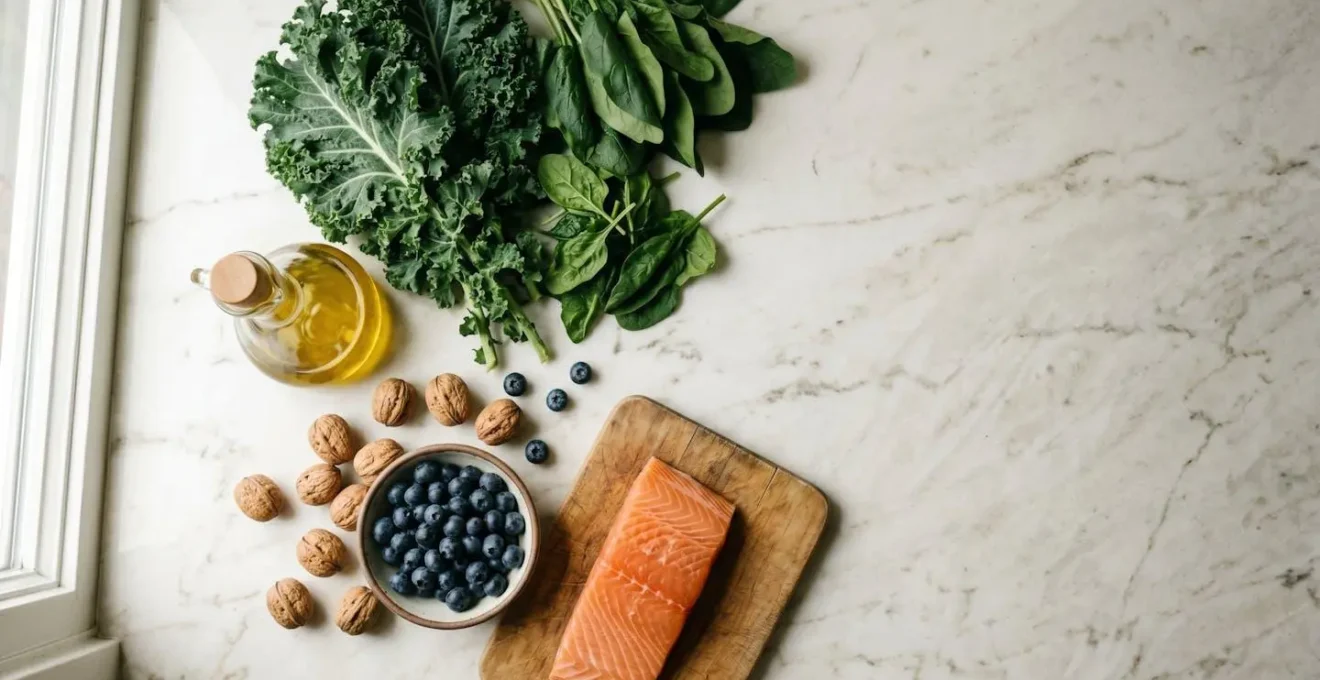
The MIND diet’s power to slow cognitive decline in seniors lies not just in its food list, but in overcoming the practical, real-world barriers to consistent healthy eating.
- Targeted food preparation, like lightly steaming leafy greens, is crucial for nutrient absorption in older adults.
- Proactive hydration strategies and specific meal timing can directly combat age-related cognitive fog and frailty.
- Integrating nutrition with medication schedules and managing polypharmacy are essential parts of a successful brain health plan.
Recommendation: Start by mastering one practical area, such as upgrading breakfast or demanding an annual medication review, to build sustainable habits for long-term brain protection.
The promise of the MIND diet (Mediterranean-DASH Intervention for Neurodegenerative Delay) has offered a beacon of hope for seniors concerned about memory loss and cognitive decline. Research consistently points to its effectiveness, suggesting it can significantly protect the ageing brain. Most guides focus on the core principles: eat more leafy greens, berries, and nuts; limit red meat, cheese, and sweets. While this “what to eat” advice is sound, it often fails to address the most significant hurdle for those over 70: the “how.”
As a geriatric nutritionist, I’ve seen firsthand that knowing the right foods isn’t enough. The real challenge lies in navigating the practicalities of ageing. Issues like a diminished sense of thirst, the difficulty of cooking for one without waste, managing multiple medications (polypharmacy), and even the simple “tea and toast” habit can sabotage the best of dietary intentions. These are not minor details; they are the critical factors that determine whether a diet remains a list on a page or becomes a life-changing, sustainable practice.
This article moves beyond the generic food lists. We will tackle the practical, science-backed strategies that make the MIND diet work in the real world for seniors. We will not just tell you to eat spinach; we’ll show you how to prepare it for maximum benefit. We won’t just say “drink water”; we’ll provide a strategy for when you don’t feel thirsty. This is a realistic roadmap to not just understanding the MIND diet, but successfully living it, turning dietary changes into a powerful, long-term defence for your cognitive health.
To provide a clear and actionable path, this guide is structured to address the most pressing questions and challenges seniors face when adopting a brain-healthy lifestyle. Explore the sections below to build your personal strategy for cognitive wellness.
Summary: A Practical Guide to the MIND Diet for Seniors
- Why Spinach and Kale Are Neuro-Protective for the Ageing Brain?
- How to Drink 1.5L of Water a Day When You Don’t Feel Thirsty?
- Olive Oil vs Low Fat: Which Is Actually Better for Senior Cognitive Health?
- The “Tea and Toast” Syndrome Error That Leads to Rapid Frailty
- When to Eat Your Main Meal to Avoid Afternoon Cognitive Slump?
- How to Link Medication to Breakfast Habits to Stop Missing Doses?
- Why You Should Demand an Annual Medication Review to Reduce “Polypharmacy”?
- How to Meal Plan for One Person Without Food Waste or Reliance on Ready Meals?
Why Spinach and Kale Are Neuro-Protective for the Ageing Brain?
The MIND diet places a strong emphasis on leafy greens, and for good reason. Spinach, kale, and other greens are packed with brain-protective compounds like folate, vitamin E, carotenoids, and flavonoids. These nutrients work together to reduce oxidative stress and inflammation, two key drivers of neurodegeneration. The impact isn’t trivial; research published in *Neurology* demonstrates that people who ate one or two servings of leafy green vegetables each day had a brain that was the equivalent of being 11 years younger in cognitive age compared to those who consumed them infrequently.
However, simply eating these vegetables isn’t the full story, especially for seniors. The body’s ability to absorb these nutrients can decline with age. This is where nutrient bioavailability—the proportion of a nutrient that is absorbed and utilized by the body—becomes critical. The tough cellular walls of raw greens can make it difficult to access their full nutritional payload. Therefore, how you prepare them matters just as much as eating them.
As you can see in the intricate texture of the leaf, these vegetables are structurally robust. Proper preparation helps break down these structures to unlock the potent nutrients within. Lightly cooking them and pairing them with a healthy fat like olive oil can dramatically increase the absorption of fat-soluble vitamins essential for brain health. Below is a practical plan to maximize the benefits you get from every serving.
Your Action Plan: Preparing Leafy Greens for Maximum Bioavailability
- Gentle Cooking: Lightly steam kale or spinach for 3-5 minutes. This softens tough fibers, making nutrients more accessible, while preserving heat-sensitive compounds like folate.
- Add Healthy Fat: Drizzle 1-2 teaspoons of extra virgin olive oil immediately after cooking. This is essential for enhancing the absorption of fat-soluble vitamins K, A, and E.
- Boost with Vitamin C: Add a squeeze of fresh lemon juice before serving. This not only counteracts any bitterness but also provides vitamin C, which significantly increases iron absorption from the greens.
- Adapt for Texture: For seniors with chewing difficulties, blend cooked greens into soups or smoothies. Combining them with berries not only improves the flavor but maintains high nutrient density in an easy-to-consume format.
- Smart Storage: Store prepared greens in airtight containers in the refrigerator for up to 3 days, or freeze in portioned servings (e.g., in an ice cube tray) for convenient daily use in soups and stews.
How to Drink 1.5L of Water a Day When You Don’t Feel Thirsty?
One of the most overlooked yet critical factors in cognitive health for seniors is hydration. As we age, our body’s thirst mechanism becomes less reliable, meaning you can be dehydrated without feeling thirsty. This is a serious issue, as the brain is approximately 75% water, and even mild dehydration has a direct and rapid impact on its function. Studies documented by Functional Medicine University reveal that even 1% dehydration causes a 5% decrease in cognitive function, while 2% dehydration can result in short-term memory loss, fuzzy thinking, and fatigue.
For a senior, these symptoms can easily be mistaken for age-related cognitive decline or the side effects of medication, creating a cycle of anxiety and misdiagnosis. The solution isn’t to force yourself to drink when you’re not thirsty, but to adopt a proactive hydration strategy. This means separating the act of drinking from the feeling of thirst. Instead of waiting for the signal, you build a routine of regular fluid intake throughout the day. This can be achieved by linking sips of water to other daily habits, like taking medication, finishing a meal, or before leaving the house.
Case Study: Rapid Cognitive Improvement with Rehydration
A documented case reported in DementiaNet highlights the dramatic effect of hydration. An older adult was experiencing increased agitation, confusion about familiar faces, and had two falls within a week. His family was considering care home placement. A district nurse identified dehydration as the probable cause. Within just two days of focusing on a structured fluid intake plan, the individual was significantly calmer, more alert, and steadier on his feet. This demonstrates how quickly dehydration-related cognitive symptoms can be reversed in seniors, proving that consistent hydration is a powerful tool for maintaining independence and clarity.
Remember, fluids don’t just have to be plain water. Unsweetened herbal teas, milk, and water-rich foods like soups, cucumbers, and melons all contribute to your daily intake. The goal is a steady supply of fluids to keep your brain functioning at its best, regardless of what your thirst signals are telling you.
Olive Oil vs Low Fat: Which Is Actually Better for Senior Cognitive Health?
For decades, low-fat diets were promoted as the key to good health. This has created confusion, especially regarding brain health, where healthy fats are not the enemy but a vital ally. The brain is nearly 60% fat, and it requires high-quality fats to maintain its structure and function. The MIND diet champions olive oil, specifically Extra Virgin Olive Oil (EVOO), as its primary fat source. This is not just a general recommendation; it’s based on specific science about how its unique compounds protect the brain.
The key difference between EVOO and refined or “regular” olive oils lies in their polyphenol content. EVOO is unrefined and rich in powerful antioxidants like oleocanthal and hydroxytyrosol, which have been shown to combat inflammation and help clear the amyloid-beta plaques associated with Alzheimer’s disease. Refined olive oils lose most of these delicate compounds during processing. This makes the choice of oil critical for achieving the neuro-protective benefits of the diet.
A recent study sheds light on this by exploring the different effects of EVOO and regular olive oil on brain health. As outlined in the table below, which summarizes findings from a clinical study on its effects on the blood-brain barrier, the type of olive oil you choose has a measurable impact on cognitive outcomes.
| Characteristic | Extra Virgin Olive Oil (EVOO) | Regular/Refined Olive Oil (ROO) |
|---|---|---|
| Polyphenol Content | High concentration of oleocanthal, hydroxytyrosol, and oleuropein | Significantly reduced due to refining process |
| Best Use for Seniors | Raw applications: salad dressings, drizzling over finished dishes, dipping | Cooking at higher temperatures, budget-friendly option |
| Blood-Brain Barrier Effect | Clinical study showed EVOO improved BBB restrictive function and reduced permeability | Did not alter blood-brain barrier function in same study |
| Memory Improvement | Significant improvement in Clinical Dementia Rating (CDR) scores after 6 months | Also improved memory but through different mechanisms |
| Cost Consideration | Higher price point ($15-40 per liter); small daily amount makes it economical | More affordable ($8-15 per liter); suitable for cooking volume needs |
| Recommended Strategy | Use 1 tablespoon daily on foods you don’t heat for maximum brain benefit | Use for sautéing vegetables and general cooking to replace butter/margarine |
The strategy is not to eliminate all other fats but to prioritize EVOO for raw applications where its benefits are preserved. Use it for your salad dressings and for drizzling over cooked vegetables or fish. For high-heat cooking, a more affordable, refined olive oil is a perfectly healthy choice to replace butter or margarine. It’s about using the right tool for the job.
The “Tea and Toast” Syndrome Error That Leads to Rapid Frailty
One of the most pervasive and damaging nutritional patterns among seniors is the “tea and toast” syndrome. It often starts innocently—a simple, comforting breakfast or a light meal when one doesn’t feel like cooking. However, a diet that regularly relies on low-protein, low-nutrient, carbohydrate-heavy meals can lead to a rapid decline in muscle mass and strength, a condition known as sarcopenia. This, in turn, accelerates the onset of frailty, increasing the risk of falls, reducing independence, and negatively impacting cognitive function.
This pattern is dangerous because it lacks adequate protein, the essential building block for muscle repair and maintenance. While toast and tea provide quick energy, it’s a short-lived spike in blood sugar followed by a crash, often contributing to afternoon fatigue and brain fog. The MIND diet combats this by emphasizing nutrient density. Every meal is an opportunity to provide the brain and body with high-quality fuel. This means actively upgrading simple meals to include protein, healthy fats, and micronutrients.
Instead of plain white toast, the solution is to build upon it. The image above shows a perfect example of a simple upgrade: a slice of whole-grain toast (providing fiber), topped with mashed avocado (healthy fats) and an egg (high-quality protein). This single change transforms a nutrient-poor meal into a powerhouse that supports both muscle and brain health. Other simple upgrades include adding a scoop of protein powder to oatmeal, stirring beans into soup, or having a small pot of Greek yogurt with berries.
Breaking the “tea and toast” habit is not about deprivation; it’s about enhancement. It requires a conscious shift in mindset, viewing every meal, especially breakfast, as the foundation for the day’s physical and mental energy. Small, consistent upgrades are the key to preventing the slide into frailty and maintaining a sharp, resilient mind.
When to Eat Your Main Meal to Avoid Afternoon Cognitive Slump?
For many seniors, the afternoon brings a wave of fatigue and mental fog that can be debilitating. This “afternoon slump” is often blamed on age, but it’s frequently a direct result of *what* and *when* you eat for lunch. A large, carbohydrate-heavy meal can cause a rapid spike and subsequent crash in blood sugar, leaving you feeling drained and unfocused. The MIND diet provides a framework for what to eat, but strategic metabolic timing—aligning your meals with your body’s natural energy rhythms—is the key to unlocking sustained cognitive performance throughout the day.
As a general rule, the best time to eat your main meal is between 12:00 PM and 1:00 PM. This timing aligns with your body’s natural cortisol peak, providing energy when you need it most and allowing ample time for digestion before the afternoon. More important than the exact time, however, is the composition of the meal. The goal is to create a plate that provides steady, slow-release energy rather than a quick jolt. This involves prioritizing protein and fiber while being mindful of the type and quantity of carbohydrates.
A recent 2024 study published in *Alzheimer’s & Dementia* reinforces the power of these small, consistent choices, finding that adding one MIND diet recommended component to one’s diet resulted in a rate reduction of cognitive decline equivalent to being two years younger. Applying this principle to lunch can have a profound effect on your afternoon. Here are two practical templates for a brain-boosting lunch:
- High-Energy Afternoon Template: A large salmon salad. Combine 4 oz of wild-caught salmon, 2 cups of mixed leafy greens, a handful of blueberries, and about 10 walnut halves. Dress with extra virgin olive oil and lemon juice. This meal delivers sustained energy from omega-3s and protein without a blood sugar spike.
- Restful Afternoon Template: Mediterranean white bean and vegetable soup. A soup made with cooked navy beans, chopped kale, tomatoes, carrots, and celery, enriched with olive oil and herbs. This lighter meal promotes a gentle afternoon without an energy crash and is excellent paired with a small slice of whole-grain bread.
The key principle is to start your lunch with the protein component (fish, beans, poultry). This helps trigger satiety hormones early, preventing overeating and stabilizing blood glucose for the hours that follow. By making lunch your main, well-balanced meal, you provide your brain with the fuel it needs to stay sharp all afternoon.
How to Link Medication to Breakfast Habits to Stop Missing Doses?
For many seniors, managing a daily medication regimen is a significant source of stress. Missing a dose of an important prescription for blood pressure, thyroid function, or cholesterol can have immediate health consequences. Forgetting medication can also create a cycle of anxiety and self-doubt about one’s memory, blurring the lines between simple forgetfulness and genuine cognitive decline. The key to consistency is not to rely on memory alone but to build an unbreakable system through habit stacking.
Habit stacking is the practice of linking a new habit (taking your medication) to an existing, deeply ingrained one. Breakfast is the perfect opportunity for this, as it’s a routine most people follow daily. The goal is to make taking your pills an automatic part of a sequence you already perform without thinking. For example, if the first thing you do every morning is make a cup of coffee or tea, that is your anchor habit.
To implement this, physically place your pill organizer right next to your coffee maker or tea kettle. The rule becomes: “After I switch on the coffee maker, I will immediately take my morning pills.” The visual cue of the pillbox next to the coffee machine acts as a powerful, non-negotiable reminder. This removes the need to “remember” and instead outsources the task to your established routine. It’s crucial to use a pill organizer sorted by day and time, as this eliminates the daily task of sorting bottles, which is another point of potential failure.
This strategy works for any established morning routine. Do you always turn on the radio for the morning news? Place your pillbox next to the radio. Do you start your day by opening the blinds? Put the pillbox on the windowsill. By integrating medication into an existing workflow, you create a system that is resilient to distraction and forgetfulness, ensuring you get the health benefits of your prescriptions without the daily mental burden.
Key Takeaways
- The MIND diet’s success depends on overcoming practical challenges like low thirst, meal planning for one, and nutrient absorption.
- Strategic food preparation (e.g., steaming greens, using EVOO raw) and meal timing are as important as the food list itself for maximizing brain benefits.
- Proactive health management, including structured hydration and demanding annual medication reviews to combat polypharmacy, are integral parts of a cognitive health strategy.
Why You Should Demand an Annual Medication Review to Reduce “Polypharmacy”?
While the MIND diet focuses on adding beneficial foods, an equally powerful strategy for protecting cognitive health is subtracting unnecessary medications. Polypharmacy is the medical term for the regular use of multiple (typically five or more) medications. While each prescription may be necessary on its own, their cumulative effect can be harmful, causing a cascade of side effects that often mimic or worsen cognitive decline. These can include dizziness, confusion, fatigue, and an increased risk of falls.
As we age, our body’s ability to process and eliminate drugs changes. A dose that was appropriate at age 65 may be too high at age 75. Furthermore, the risk of negative drug-to-drug interactions increases exponentially with each new medication added. One drug prescribed to treat the side effect of another is a common and dangerous cycle. It is essential to view your medication list not as permanent, but as a dynamic tool that needs regular re-evaluation.
This is why you should proactively demand an annual medication review with your primary care physician or a pharmacist. This is a dedicated appointment to go through every single prescription, over-the-counter drug, and supplement you take. The goal is “de-prescribing”—the safe and planned discontinuation of medications that are no longer providing benefit or whose risks outweigh their advantages. This is not about questioning your doctor’s judgment, but about initiating a collaborative conversation focused on your current quality of life.
Come to the appointment prepared. Bring a list of all your medications (including dosages) and be ready to discuss any symptoms you’re experiencing, even if they seem minor. A successful review can lead to a simplified regimen, reduced side effects, and often, a surprising improvement in mental clarity and energy. Taking control of your medication list is one of the most empowering steps you can take for your long-term brain health.
How to Meal Plan for One Person Without Food Waste or Reliance on Ready Meals?
Adopting the MIND diet is one thing; implementing it when cooking for one is another challenge entirely. Supermarkets often package fresh produce in family-sized quantities, leading to food spoilage and wasted money. The temptation to rely on sodium- and preservative-laden ready meals can be strong. However, with a few smart strategies, you can enjoy fresh, brain-healthy meals without the waste. The key is to shift from cooking single meals to thinking in terms of versatile “component cooking.”
Instead of planning seven different dinners, focus on preparing a few core components at the beginning of the week that can be mixed and matched. For example:
- Cook Once, Eat Thrice: Roast a whole chicken on Sunday. The first night, have a piece with roasted vegetables. The next day, shred the leftover meat into a large leafy green salad for lunch. Finally, use the carcass to make a simple, nutritious bone broth to use as a base for soup.
- Embrace the Freezer: Your freezer is your best ally against food waste. When you make a large batch of bean soup, lentil stew, or bolognese sauce (with lean turkey), immediately portion the extras into single-serving containers and freeze them. This creates your own healthy, homemade ready meals for busy days. Frozen fruits (especially berries) and vegetables are just as nutritious as fresh and allow you to use only what you need.
- Leverage Versatile Staples: Keep a stock of ingredients that can quickly form the base of a meal. Eggs are a protein powerhouse that can be scrambled, fried, or made into an omelet with leftover vegetables. Canned salmon or tuna can be mixed with Greek yogurt and herbs for a quick sandwich filling or salad topper.
Another smart tactic is to befriend the deli and salad bar at your grocery store. You can often buy just one or two chicken breasts, a single fish fillet, or a small portion of roasted vegetables, perfectly sized for one person. It may seem slightly more expensive per pound, but if it prevents you from throwing away half a package of spoiled food, it’s a net financial win.
Ultimately, slowing cognitive decline with the MIND diet is less about a radical overhaul and more about a series of intelligent, sustainable adjustments. It’s about building a system that works for your life. To begin this journey, focus on the area that feels most manageable to you, whether it’s demanding that medication review or simply perfecting a brain-boosting breakfast. Your first successful step is the most powerful one.