
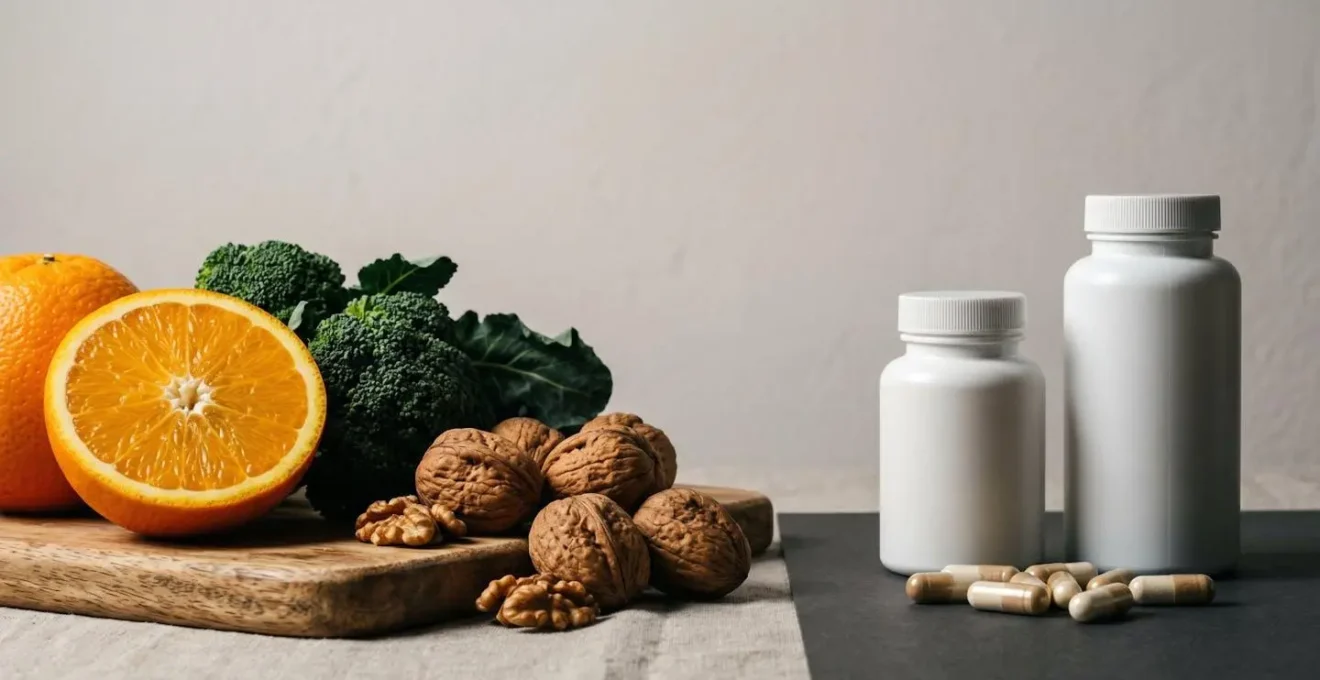
Contrary to relentless marketing, expensive antioxidant supplements are often a poor investment for pensioners; real, affordable food is not just cheaper—it’s scientifically proven to be more effective and safer.
- Your body absorbs nutrients like Vitamin C far better from whole foods (like an orange) than from an isolated, high-dose tablet, thanks to natural compounds that work in synergy.
- Certain supplements, especially Vitamin E, can be dangerous, interacting with common medications like blood thinners and even increasing health risks.
Recommendation: Focus your budget on a variety of colourful, seasonal vegetables and learn simple kitchen techniques to maximize their nutritional power, rather than spending money on pills with questionable benefits.
Walk down any high street and you’ll see the promises in bright, bold letters: “Boost Your Immunity!”, “Fight Aging!”, “Powerful Antioxidant Formula!”. The supplement industry spends a fortune convincing us, particularly seniors, that health comes in a bottle. We’re led to believe that to stay vibrant and healthy, we need to fill our cupboards with expensive pills, powders, and capsules. This narrative suggests that our daily diet is inherently lacking and that only high-strength, scientifically formulated supplements can fill the gaps.
But what if this is a costly misunderstanding? What if the key to antioxidant power isn’t found in a factory, but in your fridge and pantry? The truth is, the complex world of nutrition can’t be neatly captured in a tablet. While supplements have their place for specific, medically diagnosed deficiencies, they are often a blunt and inefficient tool for general health. For pensioners on a fixed income, every pound counts, and spending it on ineffective or even potentially harmful pills is a waste of precious resources.
This guide takes a different approach. We’re going to pull back the curtain on the supplement industry’s claims and empower you with knowledge that is both scientifically sound and budget-conscious. Forget the marketing hype. We will explore the proven superiority of whole foods, the hidden dangers of “polypharmacy” and supplement interactions, and the simple kitchen hacks that can turn your weekly shop into a powerhouse of natural, absorbable antioxidants. It’s time to shift the investment from expensive pills to smart, delicious, and affordable food.
This article will provide a clear, practical roadmap to help you get the most nutritional value for your money. We will break down why natural sources are superior, how to prepare them for maximum benefit, and how to become an empowered advocate for your own health when speaking with medical professionals.
Summary: The Smart Pensioner’s Guide to Antioxidants Without Wasting Money
- Why a £0.20 orange is better absorbed than a £20 Vitamin C tablet?
- How to cook broccoli without destroying 50% of its antioxidants?
- Dark Chocolate and Green Tea: treat or genuine health intervention?
- The danger of taking Vitamin E supplements if you are on blood thinners
- When to snack on walnuts to maximize brain absorption?
- The mistake of eating the same meal every day creating nutrient deficiencies
- Why you should demand an annual medication review to reduce “polypharmacy”?
- Why eating seasonally in winter is crucial for senior thermoregulation?
Why a £0.20 orange is better absorbed than a £20 Vitamin C tablet?
The central promise of a high-dose Vitamin C supplement seems logical: more is better. However, our bodies don’t work like that. The key concept is bioavailability—the proportion of a nutrient that is actually absorbed and used by the body. An orange contains not just Vitamin C, but a whole matrix of flavonoids, fibre, and other compounds. This natural synergy helps protect the vitamin C from oxidation and enhances its absorption in a way a synthetic, isolated tablet simply cannot replicate. Your body is designed to recognise and process food, not industrial chemicals.
In essence, much of the expensive, high-dose vitamin C from a tablet passes straight through your system, creating expensive urine. In contrast, the modest amount of vitamin C in a cheap orange is delivered in a highly effective package, ensuring you get more nutritional bang for your buck. Indeed, increasing evidence shows that antioxidants from whole foods work far more effectively than those from isolated supplements. This isn’t just theory; it’s proven by science.
Case Study: Kiwifruit vs. Synthetic Vitamin C
A randomized study directly compared the effects of taking synthetic vitamin C tablets versus eating kiwifruit. The results were clear: participants who ate the whole kiwifruit showed significantly higher levels of vitamin C (ascorbate) in their blood serum, vital organs, and immune cells compared to those who took an equivalent amount in pill form. The researchers concluded that other compounds in the kiwifruit, such as vitamin E and flavonoids, work in a powerful synergy to protect the vitamin C and dramatically improve its absorption and utility in the body. This provides strong evidence that the nutrient synergy of whole foods is superior to isolated supplements.
The takeaway is simple and empowering for anyone on a budget. You don’t need to spend a fortune on high-strength pills to support your health. The most potent and cost-effective solutions are already available in the fruit and vegetable aisle.
How to cook broccoli without destroying 50% of its antioxidants?
Broccoli is famous for its health benefits, particularly a powerful antioxidant compound called sulforaphane. However, this compound isn’t just sitting there waiting to be eaten. It’s formed by a chemical reaction when an enzyme (myrosinase) and a precursor (glucoraphanin) mix. This happens when the broccoli’s cell walls are broken—by chopping or chewing. The problem? The enzyme is extremely sensitive to heat. If you boil or heavily steam broccoli right after chopping it, you can destroy the very enzyme needed to create the health-giving sulforaphane.
This is where your kitchen becomes a pharmacy. By using a simple, no-cost technique known as “hack and hold,” you can maximize the sulforaphane content before you even turn on the stove. This method allows the crucial enzymatic reaction to take place *before* heat is applied, preserving the final antioxidant compound.
The process is incredibly straightforward and transforms how you prepare cruciferous vegetables. By letting the chopped broccoli rest, you are giving it the time it needs to produce its most powerful protective compounds. Here is the step-by-step method:
- Chop and Rest: Finely chop or shred your broccoli. The more cell walls you break, the better. Then, let it sit on the cutting board for 30-40 minutes.
- Gentle Cooking: After the rest period, cook it gently. Lightly steaming for 3-5 minutes is ideal. Microwaving with a tiny amount of water is also effective. Avoid boiling, which leaches nutrients into the water.
- Frozen Broccoli Tip: The blanching process for frozen broccoli deactivates the myrosinase enzyme. To reactivate sulforaphane production, simply add a pinch of mustard powder (which is rich in a heat-stable version of the enzyme) after cooking.
- Save the Water: If you do steam your vegetables, don’t throw the water away! Use it as a base for soups or to cook grains, as it will contain valuable water-soluble nutrients.
Dark Chocolate and Green Tea: treat or genuine health intervention?
For many, a square of dark chocolate or a cup of green tea is a simple pleasure. But growing research suggests these can be more than just treats; they can be legitimate, low-cost health interventions thanks to their high content of antioxidants called flavanols. These compounds are linked to improved cardiovascular health, better blood flow, and reduced inflammation. The question for a savvy consumer is: how much is needed to make a real difference, and are all products created equal?
The science provides a surprisingly specific answer. The large-scale COSMOS clinical trial, involving over 21,000 participants, found that a daily intake of 586 mg of flavanols daily reduced cardiovascular disease deaths by 27%. This amount can be achieved with about two to three cups of green tea or one to two small servings of high-quality dark chocolate per day. This transforms these items from simple indulgences into a potentially powerful part of a preventative health strategy.
However, this is where a skeptical eye is crucial. The supplement and food industries are quick to market “antioxidant-rich” products, but the actual flavanol content can vary wildly. Not all dark chocolate is created equal, and processing can destroy the very benefits you’re paying for.
Processing methods—such as alkalizing cocoa (often labeled as ‘Dutch-processed’), using lower cocoa percentages or adding longer ingredient lists—can significantly reduce flavanol content, meaning some chocolates contain far fewer antioxidants than consumers might expect.
– Leah Sarris, M.B.A., RD, LDN
To ensure you’re getting a genuine health intervention and not just a sugary snack, look for dark chocolate with 70% cocoa or higher and check the ingredients list. Avoid products that say “processed with alkali” or “Dutch-processed,” as this method slashes flavanol content. For green tea, simple, minimally processed leaves are best. This is about making smart, informed choices to get real health benefits without overpaying.
The danger of taking Vitamin E supplements if you are on blood thinners
The “more is better” philosophy pushed by the supplement industry isn’t just inefficient; it can be actively dangerous. This is especially true for fat-soluble vitamins like Vitamin E, which can build up in the body to toxic levels. For seniors, many of whom are on prescribed medications, the risk of negative interactions is a serious concern that is often overlooked in the marketing of “natural” health products.
One of the most critical interactions is between Vitamin E supplements and common blood-thinning medications like aspirin or warfarin. Vitamin E itself has a mild blood-thinning effect. When taken in the high doses found in many supplements, it can dangerously amplify the effect of these drugs, significantly increasing the risk of uncontrolled bleeding and haemorrhage. Research indicates that taking 300mg or more of vitamin E daily can interfere with blood thinners. It is far safer to get Vitamin E from food sources like sunflower seeds, almonds, and spinach, where it is present in naturally balanced, safer amounts.
This highlights a crucial point: any supplement is a bioactive substance that can interact with your body and your other medications. This is why you must treat them with the same caution as prescription drugs and become an empowered manager of your own health. Keeping a detailed list of everything you take—prescriptions, over-the-counter pills, and all supplements—is not just good practice; it’s a vital safety measure. This list is your most powerful tool in your annual medication review.
When to snack on walnuts to maximize brain absorption?
Walnuts are a true superfood for seniors, and thankfully, an affordable one. They are packed with a unique combination of antioxidants and, most importantly, are one of the best plant-based sources of omega-3 fatty acids, which are critical for brain health and reducing inflammation. As the esteemed Mayo Clinic notes, they are among the top nuts for antioxidant power.
Walnuts and pecans are some of the top nuts for antioxidant content.
– Mayo Clinic Nutrition Team, Add antioxidants to your diet
But to get the most out of them, a little strategy goes a long way. The key is consistency and smart pairing. A single handful (about 28g or 7 whole walnuts) is the ideal daily portion. But simply grabbing them whenever you remember isn’t the most effective way to use them. The fats and fibre in walnuts are excellent for stabilizing energy levels and preventing the blood sugar spikes that can lead to afternoon slumps and brain fog. Therefore, the best time to eat them is as a mid-morning or mid-afternoon snack, particularly when paired with a piece of fruit like an apple or a handful of berries.
This combination provides a slow-release of energy, keeping you feeling full and focused, while the different types of fibre and antioxidants work together. For easy and consistent portion control that fits a tight budget, try this simple system:
- At the start of the week, measure out seven daily portions of walnuts.
- Place each portion into a small reusable container or bag.
- Store them in a cool, dark place (like a cupboard) to protect the delicate omega-3 oils from going rancid.
- Grab one portion each day for your planned snack. You can also sprinkle it over your morning porridge or yoghurt to add healthy fats and prebiotic fibre that supports a healthy gut.
This simple habit ensures you get a consistent, effective dose of brain-boosting nutrients without over-consuming calories or breaking the bank.
The mistake of eating the same meal every day creating nutrient deficiencies
For convenience and budget, it can be easy to fall into a routine of eating the same few meals over and over. A simple breakfast, the same sandwich for lunch, a familiar dinner. While this simplifies shopping, it can lead to a state of “monotonous eating” that creates hidden nutrient deficiencies. Even if your go-to meal is healthy, you’ll be missing out on the vast spectrum of different antioxidants, vitamins, and minerals found in other foods.
What’s actually most important when it comes to antioxidants is variety.
– Life Extension Nutrition Team, Best Antioxidant Supplements for Your Health
Different colours in fruits and vegetables signify different types of antioxidants. The red in tomatoes (lycopene), the orange in carrots (beta-carotene), and the deep purple in beetroot (anthocyanins) all have unique protective roles in the body. If you only eat green vegetables, you’re missing out entirely on the benefits of the others. Variety is your best defence against nutritional gaps and is far more effective and cheaper than trying to plug those gaps with a multivitamin.
Breaking out of a food rut doesn’t have to be complicated or expensive. A great strategy is to use a “Power Bowl” template, which allows for easy substitution while ensuring a balanced meal. The goal is to rotate just one or two ingredients each week to effortlessly increase your dietary diversity.
- Component 1: Base of Greens. Rotate between spinach, kale, and mixed salad leaves. Frozen options are just as nutritious and often cheaper.
- Component 2: Protein Scoop. Alternate between cheap and healthy options like lentils, chickpeas, tinned beans, canned fish (in water), or a boiled egg.
- Component 3: Two Scoops of Colourful Veg. This is where you add variety. Use a mix of frozen peppers, sweetcorn, and peas one week, then switch to roasted carrots and beetroot the next.
- Component 4: Healthy Fat Drizzle. Finish with a drizzle of olive oil, a few nuts or seeds, or a slice of avocado.
The rotation strategy is simple: each week, intentionally swap just one ingredient from your usual choices. If you always buy apples, try pears. If you always buy carrots, try sweet potato. This small change makes a huge cumulative difference to your health over time.
Key takeaways
- Whole foods are more effective and cheaper than supplements because your body absorbs the nutrients better.
- Simple cooking techniques, like letting chopped broccoli rest, can dramatically increase its antioxidant content for free.
- Be a skeptical consumer: high-dose supplements can be dangerous and interact with medications, so a regular medication review with your doctor is essential.
Why you should demand an annual medication review to reduce “polypharmacy”?
As we age, it’s common to accumulate prescriptions from different doctors for various ailments. This phenomenon, known as polypharmacy (taking multiple medications), is a significant health risk for seniors. Each new drug adds to the “medication burden,” increasing the risk of side effects, drug-nutrient depletions, and dangerous interactions. Often, a new prescription is given to treat the side effects of another, creating a vicious cycle. Many seniors, influenced by heavy marketing, then add supplements into this complex mix, often without realising the potential for harm.
Supplements are not benign. As recent research published in 2025 demonstrates, high-dose Vitamin E supplementation has been linked to an increased risk of all-cause mortality and hemorrhagic stroke, especially for those with existing health conditions. This is the opposite of the health benefit promised on the bottle. It underscores a critical truth: individual antioxidants taken as supplements have far less scientific support and carry more risks than those obtained from a balanced diet.
This is why you must be an active, empowered participant in your healthcare. You have the right to, and should, demand an annual medication review with your doctor or pharmacist. The goal is “deprescribing”—safely reducing or stopping medications that are no longer beneficial or may be causing harm. This review must include every single thing you take, including over-the-counter pills, herbal remedies, and all vitamin and mineral supplements. Do not assume your doctor knows everything you are taking.
Your Action Plan: The Annual Medication Review
- Compile Your Master List: Before your appointment, write down every single substance you take: all prescribed drugs, over-the-counter medications (e.g., painkillers), vitamins, and herbal supplements. Include the dose and how often you take it.
- Document Your Symptoms: Note any persistent symptoms you experience, even if they seem minor (e.g., dizziness, fatigue, dry mouth, unusual bruising). Ask your doctor if any could be a side effect.
- Question Each Medication’s Goal: For each prescribed drug, ask: “What is the specific goal of this medication, and how do we measure if it’s working?”
- Discuss Interactions: Explicitly ask: “Are there any potential interactions between my prescriptions and the supplements or vitamins on my list?” This is where you mention your Vitamin E or multivitamin.
- Explore Deprescribing: Ask the crucial question: “Given my current health, diet, and lifestyle, can we safely reduce the dosage of or stop any of these medications?”
Why eating seasonally in winter is crucial for senior thermoregulation?
As we get older, our body’s ability to regulate its internal temperature (thermoregulation) can become less efficient, making us more susceptible to the cold. Staying warm in winter isn’t just about turning up the heating; your diet plays a surprisingly powerful role. Eating seasonally in winter is a smart, budget-friendly strategy that provides the specific nutrients and energy your body needs during the colder months.
Winter vegetables like carrots, parsnips, squash, and cabbage are not only at their cheapest and most nutrient-dense during this time, but they are also typically harder, more fibrous foods. The process of digesting these complex carbohydrates and fibres requires more energy from your body, a phenomenon called diet-induced thermogenesis. This metabolic process generates internal heat, literally warming you from the inside out. Slow-cooked stews, baked root vegetables, and thick soups are perfect winter meals for this reason.
A common concern is that fresh produce is expensive or hard to find in winter. This is a myth. Not only are seasonal root vegetables very affordable, but the freezer aisle is your best friend. In fact, nutrition research confirms that frozen fruits and vegetables are often nutritionally superior to out-of-season “fresh” produce that has travelled thousands of miles. They are frozen at peak ripeness, locking in their antioxidants and vitamins, while also being incredibly cost-effective and reducing food waste.
To make this work for you, here is a simple winter eating strategy:
- Focus on Root Vegetables: Stock up on carrots, swedes, parsnips, and potatoes. They are cheap, store well, and are perfect for baking, roasting, and making soups.
- Embrace Slow Cooking: Use a slow cooker to make large batches of stew with lentils, beans, and winter vegetables. This breaks down the fibres, making them easier to digest, and the low-energy cooking saves on electricity bills.
- Make Puréed Soups: Blending cooked winter vegetables into a soup is an excellent way to get concentrated nutrition that is very gentle on the digestive system.
- Use Your Freezer: Cook in bulk on one day and freeze portions for the rest of the week. This saves time, energy, and ensures you always have a warm, nutritious meal ready.
By aligning your diet with the seasons, you provide your body with the right fuel to stay warm and healthy, all while keeping your food bills down.
Your health is your greatest asset, and you are its most important guardian. By being a skeptical, informed consumer and focusing on the proven power of real food, you can build robust health and resilience without draining your pension. Start today by making one small change—try the “hack and hold” method with broccoli, plan a “Power Bowl” for lunch, or write down your list of medications for your next doctor’s visit. Your body and your wallet will thank you.