
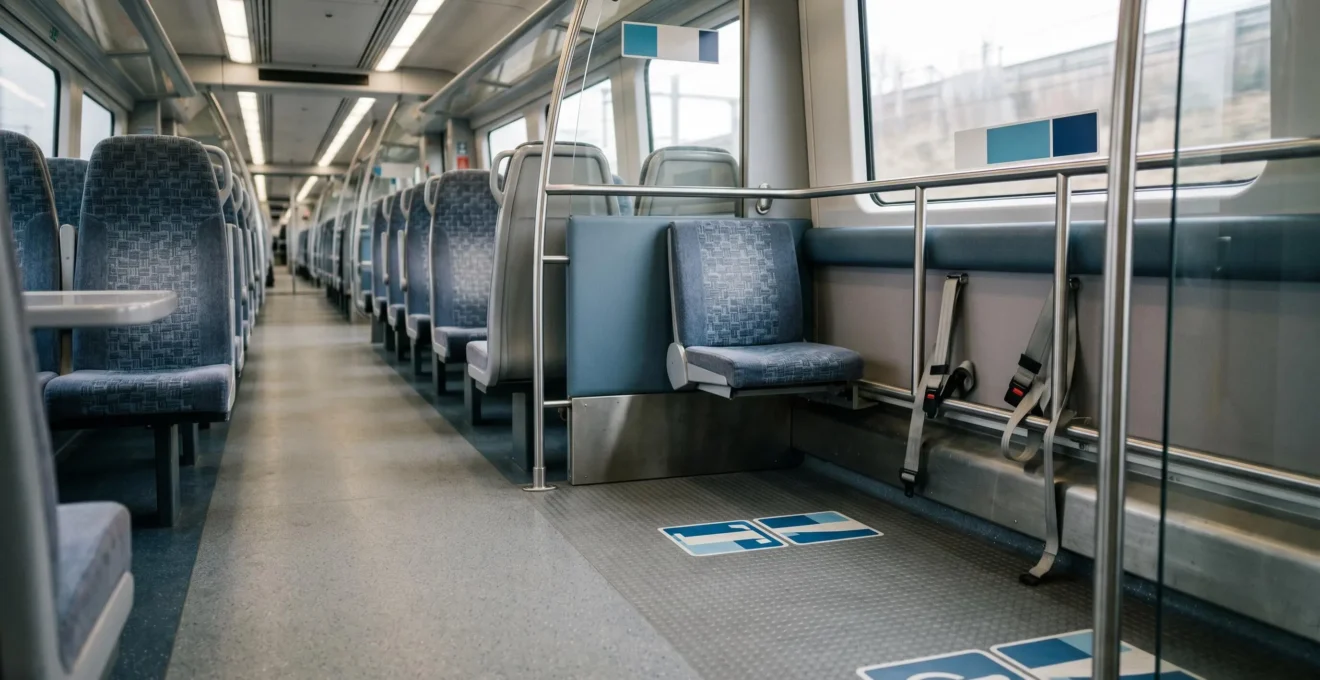
Choosing the right wheelchair for UK public transport is less about its features and more about how its ‘logistical footprint’ matches your specific daily journey.
- Manual vs. Electric is the wrong question; the right one is ‘what is the single heaviest component a companion has to lift?’
- Real-world battery life depends on a ‘battery budget’ that accounts for UK hills, cold weather, and stop-start travel, not just the manufacturer’s maximum range.
Recommendation: Conduct a personal ‘mobility audit’ before approaching the NHS or a retailer, documenting your exact route and challenges to get the chair you actually need.
The promise of a wheelchair is freedom. The ability to navigate your town, meet friends for coffee, and use public transport without a second thought. Yet for many active seniors, the reality can be a frustrating mismatch between the chair they have and the journeys they want to take. A model that seems perfect in a showroom can become a logistical nightmare on a crowded train platform or when faced with the boot of a small hatchback. The debate often gets stuck on a simple ‘electric versus manual’ comparison, focusing on motor power and battery size.
This approach misses the crucial point. The right wheelchair isn’t the one with the best specifications; it’s the one that integrates seamlessly into the entirety of your journey. This involves a more profound analysis—a ‘mobility audit’ of your daily life. It requires you to think less like a consumer comparing products and more like a logistician planning a complex operation. We must consider the lifting burden on a spouse, the true energy consumption on a cold British morning, and the precise dimensions needed to navigate not just the bus, but the uneven pavement to get to the bus stop.
Instead of asking “electric or manual?”, the more powerful question is: “What is the complete logistical challenge of my commute, and which tool is best suited to solve it?” This guide will walk you through that mobility audit. We will dissect the real-world factors that determine a chair’s usefulness on UK buses and trains, moving beyond generic advice to provide a strategic framework for making a choice that truly enhances your independence.
This article provides a structured approach to help you make the best choice for your specific needs. The following sections break down the key considerations, from funding and fit to the practicalities of lifting and battery management on your daily commute.
Summary: Electric vs Manual: Which wheelchair fits a typical UK public transport commute?
- Why the NHS voucher scheme might not cover the lightweight chair you actually need?
- How to measure seat width so you don’t develop pressure sores in 6 months?
- Folding vs Rigid frame: which is easier for a spouse to lift into a hatchback?
- The centre-of-gravity mistake that makes active wheelchairs unstable for beginners
- When to charge your electric chair to ensure it survives a full day out?
- Leasing a car vs Buying: does trading your allowance make financial sense?
- How to set up “Health Sharing” so your daughter gets your fall alerts?
- Blue Badge eligibility: Do you qualify even if you don’t use a wheelchair?
Why the NHS voucher scheme might not cover the lightweight chair you actually need?
The starting point for many is the NHS wheelchair service. It’s a vital resource, and it’s important to understand how it works to get the best outcome. Since December 2, 2019, people accessing NHS wheelchair services have had a legal right to a personal wheelchair budget (PWB). This is a significant step forward, giving users more choice and control. The PWB can be used to accept the standard NHS-provided chair, or as a contribution towards a different, more advanced model from an independent supplier—this is known as a ‘top-up’ contribution.
The challenge, however, is that the NHS assessment is primarily focused on meeting your essential clinical and mobility needs *within the home and its immediate vicinity*. The standard-issue chair might be perfectly adequate for moving between rooms but may lack the specific features required for a daily commute. A lightweight, quick-folding frame or enhanced suspension for uneven pavements are often considered ‘lifestyle’ features rather than ‘clinical’ necessities. This is where your personal mobility audit becomes a powerful tool for advocacy.
By presenting your Occupational Therapist with a detailed, documented breakdown of your daily travel, you can make a stronger case for why these features are, in fact, essential to your independence, employment, or social well-being. The goal is to shift the conversation from a generic prescription to a collaborative solution that addresses your real-world logistical challenges. Proving that a specific chair is the key to you maintaining your independence is the most effective strategy.
Action Plan: Preparing for Your NHS Wheelchair Assessment
- Document your real-world mobility needs beyond the home – specify daily commuting distance, frequency, and public transport types used.
- List essential features for public transport use: compact folding dimensions for train luggage racks and total folded size measurements.
- Identify kerb-climbing ability requirements and suspension quality needed for uneven UK pavements.
- Articulate to your Occupational Therapist how these features impact your independence and ability to maintain employment or social connections.
- Request documentation of the ‘top-up’ contribution amount if the NHS basic provision doesn’t meet your assessed commuting needs.
How to measure seat width so you don’t develop pressure sores in 6 months?
Before considering frames or batteries, the most critical measurement is the one that directly impacts your health: seat width. An incorrectly sized seat is not just a matter of comfort; it’s a primary risk factor for developing painful and dangerous pressure sores. A seat that’s too narrow creates constant pressure points on your hips and thighs. Conversely, a seat that’s too wide forces you to lean to one side for support, leading to poor posture and spinal issues, and can make the chair too wide for narrow train aisles.
The goal is to find the sweet spot that provides snug support without compression. A common rule of thumb is the “four-finger test”: you should be able to slide your flat hand (four fingers) vertically between your thigh and the side of the chair. However, a static measurement can be misleading. Your body width changes depending on the clothes you wear. It’s essential to take measurements while wearing your bulkiest winter coat to ensure a good fit year-round.
Furthermore, the measurement must be dynamic. While seated, practice the movements you’d make during a commute. Reach sideways as if to press a bus stop button or grab a handrail. Does the seat guard pinch your side? Finally, remember the chair’s overall width. That perfect seat measurement is useless if the entire chair is too wide to fit down the aisle of an older regional train, which can be as narrow as 70cm. Your personal fit must exist in harmony with the environmental constraints of your journey.
Folding vs Rigid frame: which is easier for a spouse to lift into a hatchback?
The ‘folding versus rigid’ debate is often framed around performance and portability for the user. However, for many, the deciding factor is the ‘lifting burden’—the ease with which a companion can lift the chair into a vehicle. This is a critical part of the door-to-door commute. A heavy, awkward lift can cause injury and create a significant barrier to travel. Looking at total weight alone is deceptive; the key is the weight of the single heaviest component and the lifting method.
A typical folding manual chair, while convenient, must be lifted as a single, often awkward unit. A rigid frame chair, despite its name, is frequently lighter overall and designed for disassembly. The quick-release wheels can be popped off in seconds, breaking the total weight into much more manageable pieces: a lightweight frame and two light wheels. For an electric chair, this is even more critical. Lifting a 20kg power chair is a two-person job, but if the 5kg battery can be removed first, the task becomes more feasible.
The following table breaks down the reality of the lifting burden, moving beyond simple total weight to consider the practical experience of loading each type of chair. This analysis of component weights, as shown in a breakdown for public transport travel, is essential for a true mobility audit.
| Chair Type | Total Weight | Lifting Method | Component Weights | Awkwardness Factor (1-5) |
|---|---|---|---|---|
| Folding Manual Chair | 12-14 kg | Single awkward lift | One 12kg unit (no separation) | 4/5 – Heavy, difficult grip points |
| Rigid Frame Manual Chair | 8-10 kg total | Multiple lighter lifts | Frame: 6kg + Two wheels: 2kg each | 2/5 – Manageable separate components |
| Lightweight Folding Power Chair | 18-22 kg | Single very heavy lift or battery removal first | Chair: 13-17kg + Battery: 5kg | 5/5 – Extremely awkward, requires two people |
Ultimately, the “easiest” chair to lift is not necessarily the lightest overall, but the one that can be broken down into the lightest, least awkward parts. This is a crucial conversation to have with your partner or carer and should be a practical test you perform at the dealership.
The centre-of-gravity mistake that makes active wheelchairs unstable for beginners
For new users of active, lightweight manual wheelchairs, there’s often a period of adjustment that can feel unnervingly unstable. The chair may seem ‘tippy’ backwards, especially when accelerating quickly or going up a small incline. This isn’t a design flaw; it’s a feature, and it revolves around a concept that is critical to performance: the centre of gravity (CoG). Understanding and mastering this is key to unlocking the full agility of an active chair.
In a standard, non-active wheelchair, the rear axle is typically fixed in a very stable, rearward position. This makes the chair very difficult to tip, but it also makes it sluggish and hard to manoeuvre. An active user’s chair allows the rear axle to be adjusted forward or backward. Moving the axle forward, closer to your body’s CoG, places more of your weight on the larger rear wheels and less on the small front castors. This dramatically reduces rolling resistance, making the chair easier to push and turn. It’s what allows experienced users to perform ‘wheelies’ to mount kerbs.
The common mistake for beginners is starting with the axle too far forward in an attempt to get maximum performance immediately. This is the equivalent of a learner driver starting in a Formula 1 car. The chair becomes highly responsive but unforgivingly unstable for someone not yet accustomed to it. The correct approach is to start with the axle in a more rearward, stable position. Then, as your confidence and core strength grow, you can incrementally move it forward by a centimetre at a time over weeks or months. This gradual adjustment allows you to find the perfect balance between stability and agility that suits your skill level and daily environment.
When to charge your electric chair to ensure it survives a full day out?
For power chair users, the manufacturer’s stated range—often ‘up to 15 miles’—can create a false sense of security. This figure is typically based on ideal conditions: a lightweight user on a perfectly flat, smooth surface in temperate weather. The reality of a UK commute is very different. To avoid the anxiety of a dwindling battery indicator halfway through your journey, you must adopt a ‘battery budgeting’ mindset.
Think of your battery’s capacity not as a fixed distance, but as a daily energy allowance that is spent at different rates. Several factors will drain your budget much faster than anticipated:
- Terrain: Steep hills and uneven pavements with high kerbs require a significant ‘power spend’. A single steep incline can consume 30% more power than cruising on the flat.
- Weather: Cold is the enemy of battery performance. For example, in typical UK winter conditions with light frost, battery capacity can be reduced by around 25 percent. You must factor this in from November to March.
- Travel Patterns: Constant stopping and starting while navigating crowds or waiting for connections uses 15-20% more energy than steady, continuous travel.
A full day’s commute involving a hilly walk to the station, a cold wait on the platform, and navigating busy city streets could easily halve your chair’s theoretical maximum range. The solution is twofold. Firstly, create a charging routine. For modern lithium-ion batteries, it’s healthier to perform frequent partial charges (e.g., topping up after every journey) rather than waiting for the battery to be fully depleted. Secondly, identify ‘opportunity charging’ locations on your route—a coffee shop with an accessible plug socket or a newer train with at-seat power can provide a crucial top-up to get you home safely.
Leasing a car vs Buying: does trading your allowance make financial sense?
For some wheelchair users, the ‘first and last mile’ of a public transport journey—getting from home to the station and from the destination station to the final location—is the biggest hurdle. In these cases, having an adapted vehicle becomes a critical part of the mobility ecosystem. A common question is whether to use a mobility allowance, such as that from PIP, to lease a vehicle through a scheme like Motability or to save up and buy a vehicle outright.
The financial trade-off requires careful consideration. Buying a vehicle means you own an asset at the end. You can choose any model you like and adapt it, and it will have a resale value. However, you are solely responsible for the significant and often unpredictable costs of insurance, breakdown cover, servicing, and repairs—all of which can be more expensive for adapted vehicles.
Leasing through a comprehensive scheme offers a different value proposition, focusing on peace of mind and predictable budgeting over asset ownership. It’s a shift from a capital purchase to an operational expense, which can be highly beneficial for managing a tight budget.
Motability Scheme All-Inclusive Value Analysis
The Motability Scheme provides comprehensive all-inclusive lease packages for wheelchair users trading their mobility allowance, covering insurance, breakdown assistance, and maintenance – financial burdens that significantly impact individuals with limited energy and time. The scheme particularly benefits powerchair users who require Wheelchair Accessible Vehicles (WAVs), where the total cost of vehicle adaptations, specialized insurance, and regular maintenance would otherwise be prohibitive. However, users must calculate the opportunity cost: at the lease end, no asset remains, unlike purchasing where the adapted vehicle retains resale value.
The decision isn’t purely financial. For many, the all-inclusive nature of the lease, which removes the mental load of arranging insurance or dealing with unexpected repair bills, is a benefit that outweighs the lack of ownership. It’s a choice between building equity in an asset versus paying for a reliable, stress-free service.
How to set up “Health Sharing” so your daughter gets your fall alerts?
True independence is not just about being able to get out and about; it’s also about having the peace of mind that if something goes wrong, help is at hand. For active seniors and their families, modern technology offers powerful tools to create a discreet but effective safety net. “Health Sharing” features, built into most modern smartphones like Apple’s iPhone, are a prime example.
This isn’t about intrusive tracking. It’s about giving specific, permission-based access to crucial information in an emergency. For instance, an active wheelchair user might be out for the day, navigating a busy city. With Health Sharing properly configured, if their Apple Watch detects a hard fall and the user is unresponsive, it can automatically send an alert to their designated emergency contact—for example, their daughter. This alert includes the user’s precise location, allowing for a swift and effective response.
Setting this up is straightforward. On an iPhone, it’s managed through the ‘Health’ app. The process involves:
- Creating your Medical ID: This includes emergency contacts, allergies, and medical conditions. This information can be viewed from the lock screen by first responders.
- Setting up Health Sharing: You can invite a family member (like your daughter) to view your health data. You have granular control over what you share—it could be everything, or just specific high-priority alerts like fall notifications or high/low heart rate warnings.
- Enabling Fall Detection: On an Apple Watch, this feature is automatically enabled for users over 55. It’s crucial to check that it is turned on and that your emergency contacts are correctly configured.
This simple setup transforms a personal device into a powerful safety tool, providing confidence for the user to be more adventurous and peace of mind for their family.
Key takeaways
- Your wheelchair choice should be driven by a ‘mobility audit’ of your entire daily journey, not just product specs.
- The ‘lifting burden’ for a companion is crucial; focus on the weight of the heaviest single component, not just the total weight.
- Real-world battery performance requires ‘battery budgeting’, accounting for UK-specific factors like cold, hills, and stop-start travel.
Blue Badge eligibility: Do you qualify even if you don’t use a wheelchair?
The Blue Badge scheme is one of the most powerful enablers for maintaining mobility and independence, but a common misconception is that it is exclusively for full-time wheelchair users. This is not the case. The scheme is designed to help people with mobility challenges access their communities, and these challenges are not always visibly apparent. A crucial change in regulations has broadened the scope to formally include those with non-visible conditions.
Indeed, in August 2019, Blue Badge scheme eligibility criteria were extended to include people with non-visible and neurological disabilities. This means individuals who experience significant difficulty or overwhelming psychological distress when undertaking a journey can now qualify. This could include people with anxiety, dementia, autism, or conditions that cause severe pain, breathlessness, or fatigue after walking a short distance, even if they don’t require a wheelchair at all times.
Eligibility often falls into several routes. Some people qualify automatically if they receive certain benefits, such as the higher rate of the mobility component of Disability Living Allowance (DLA) or score 8+ points under the ‘moving around’ activity of Personal Independence Payment (PIP). Others must apply under a ‘discretionary’ route, providing evidence from healthcare professionals that details how their condition substantially impacts their ability to walk or plan and follow a journey. The key is to demonstrate the severe impact on mobility, whether physical or psychological. As of the latest government data, there were 3.07 million valid Blue Badges held in England, a testament to its vital role. For a commuter, a Blue Badge can be the critical link that makes the entire public transport journey possible, allowing a safe drop-off at the station entrance.
Ultimately, choosing the right wheelchair is a deeply personal decision that goes far beyond a simple comparison of specifications. By conducting a thorough mobility audit of your own life—your routes, your home, the people who support you—you empower yourself to make an informed choice. You move from being a passive recipient of equipment to an active director of your own mobility strategy. This is the key to ensuring your wheelchair is not just a tool, but a true partner in your continued independence and active engagement with the world.