
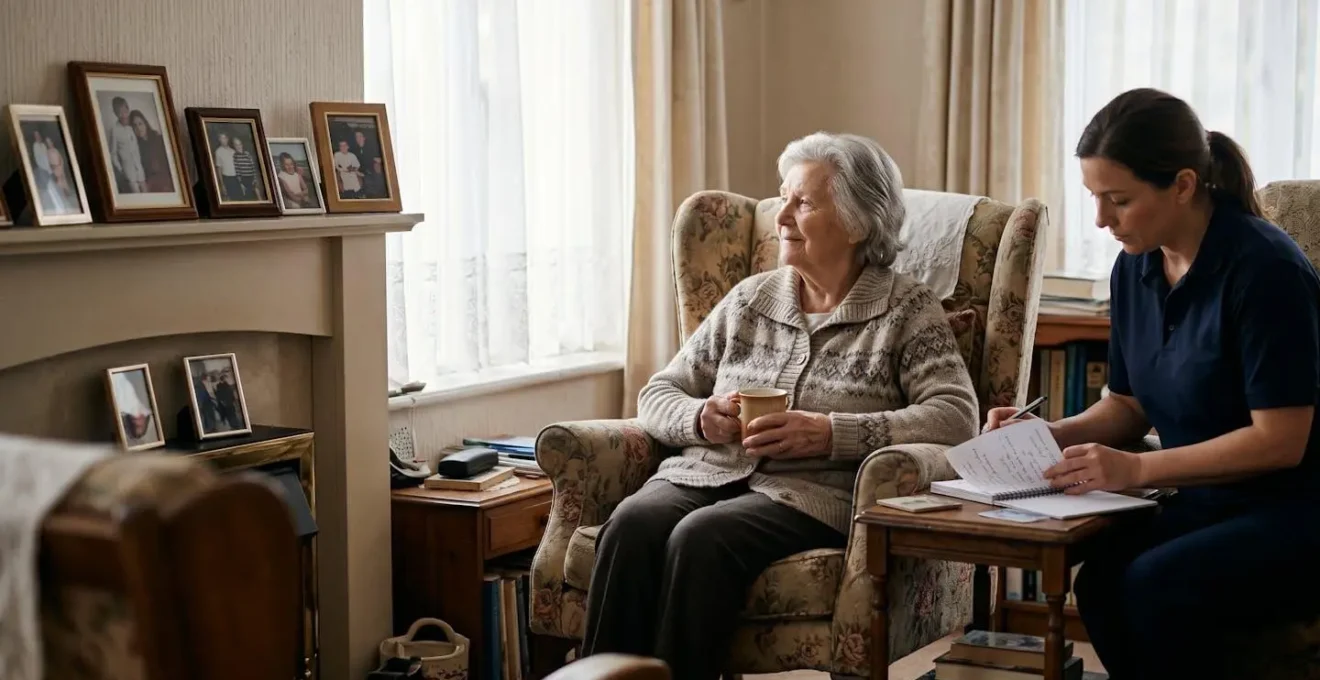
Live-in care appears cheaper on paper, but success hinges on your family’s ability to manage your home as a professional care setting.
- Significant cost savings are primarily for couples and are easily eroded by hidden expenses like food, utilities, and higher-level night care.
- The quality of one-to-one care depends entirely on non-financial factors you must manage, such as carer compatibility, proper handovers, and providing adequate living quarters.
Recommendation: Before making any commitment, you must audit your home’s infrastructure, your true budget, and your legal paperwork. This guide provides the framework to do so.
For families facing the need for 24-hour care, the decision between keeping a loved one at home or moving them to a residential facility is one of the most emotionally and financially charged journeys they will undertake. The default desire, often reinforced by a heartfelt promise, is to keep Mum or Dad in the familiar comfort of their own home. This path, known as live-in care, presents a compelling vision of personalised attention and continuity.
However, the conventional wisdom often pits the “warmth of home” against the “impersonal institution” in a simplistic narrative. The reality is far more complex. Choosing live-in care is not just a care decision; it’s a commitment to becoming the manager of a small, intensive healthcare operation within your family home. The true cost isn’t just the weekly fee; it’s measured in increased utility bills, the emotional labour of managing staff, and the logistical challenges of creating a safe and professional environment.
But what if the key to making the right choice wasn’t just comparing weekly fees, but understanding the hidden operational layer that makes or breaks a live-in care arrangement? This guide moves beyond the brochures. We will dissect the granular financial realities, the practical requirements for success, the critical legal safeguards you cannot ignore, and the deeply human element of matching care to personality. This is the conversation you need to have before you decide.
This article provides a structured comparison, exploring the critical questions you must ask to determine the most viable, sustainable, and dignified path forward for your loved one. Below is a summary of the key areas we will investigate to give you a complete picture.
Summary: A Realistic Look at Live-in Care vs. Care Homes
- Why staying at home can cost 40% less than a care home in the South East?
- Why you need a decent spare room and internet to attract a good live-in carer?
- Who pays for the carer’s food: the hidden costs of live-in arrangements?
- Waking Night vs Sleeping Night: understanding the legal rest limits?
- The mistake of forcing a chatty carer on a silent senior
- How to manage the “handover week” when live-in carers swap shifts?
- The mistake of promising “I will never put you in a home” that you can’t keep
- Lasting Power of Attorney (LPA): Why you must sign it before the diagnosis?
Why staying at home can cost 40% less than a care home in the South East?
The financial argument is often the primary driver when comparing care options. On the surface, the weekly costs for a single person can seem comparable. Based on 2026 UK industry data, live-in care can range from £1,200-£1,500 per week, while a residential care home sits around £1,298 and a nursing home at £1,535. However, this headline figure hides the most significant financial advantage of live-in care: its scalability for couples and the preservation of the family home as an asset.
For a couple where both individuals require care, the economic equation shifts dramatically. A single live-in carer can often support both people, with only a marginal increase in their weekly fee. In contrast, a care home will charge per person, effectively doubling the cost. This is where the most substantial savings are realised, potentially amounting to tens of thousands of pounds a year.
The table below illustrates how the costs diverge, especially when both partners need support.
| Scenario | Live-in Care Weekly Cost | Care Home Weekly Cost | Annual Difference |
|---|---|---|---|
| Single person (residential care needs) | £1,200-£1,500 | £1,298 | Comparable or slight saving |
| Single person (nursing care needs) | £1,400-£1,800 | £1,535 | Comparable |
| Couple (both need care) | £1,350-£1,600 (minimal increase for 2nd person) | £2,596-£3,070 (double occupancy) | £50,000-£76,000/year saved |
| South East regional premium | +10-15% | +20-30% | Gap widens in higher-cost areas |
Case Study: Asset preservation through live-in care
Live-in care enables families to preserve the family home as an inheritance asset. Unlike care home placement which may require selling the property once savings fall below the £23,250 threshold in England, staying at home with live-in care means the property remains in the family estate. For a couple, this preservation is particularly significant: one carer’s salary serves both individuals, costing significantly less than two separate care home placements, while the home continues to appreciate in value rather than being liquidated to fund residential care fees.
This financial model makes live-in care an incredibly powerful tool for asset preservation, but only if the other operational aspects are managed correctly. The initial cost comparison is just the first step in a more complex calculation.
Why you need a decent spare room and internet to attract a good live-in carer?
When you hire a live-in carer, you are not just employing a service; you are inviting a professional to make your home their place of work and rest. The quality of the carer you attract and retain is directly linked to the quality of the accommodation and facilities you provide. This is a non-negotiable part of the arrangement and a key piece of the “care infrastructure” you are now responsible for building. A top-tier carer has choices, and they will favour placements that respect their need for privacy, comfort, and connectivity.
This means providing a dedicated private bedroom that is clean, adequately heated, and properly furnished. A sofa bed in the living room or a shared space is unacceptable and will only attract lower-quality or desperate candidates. The room should have a door that locks, a window for natural light, and storage like a wardrobe and chest of drawers for their belongings. It’s about providing a professional a place to decompress and live their own life outside of working hours.
Furthermore, reliable internet access has shifted from a luxury to an essential utility. As AgeSpace, a respected resource for elderly care, notes in its practical guidance:
Having access to functional Wifi is very important for private live-in carers. This is both because Wifi is used for carrying out some of the duties of the carer, and to help the live-in carer feel at home.
– AgeSpace, Practical tips on preparing your home for a live-in carer
Carers use the internet for logging care notes, communicating with the agency, ordering prescriptions, and, crucially, for their own mental health and connection to friends and family. An unreliable connection creates professional friction and personal isolation, leading to high carer turnover.
Who pays for the carer’s food: the hidden costs of live-in arrangements?
One of the most common oversights when budgeting for live-in care is the “true cost of care” beyond the agency’s weekly fee. While you are not directly paying for a carer’s personal shopping, their presence in the house 24/7 inevitably increases household expenditure. It’s crucial to budget for this from the outset to avoid financial strain and potential disputes. This includes significantly higher utility bills—more heating, water, and electricity—and, most notably, the cost of food.
Typically, a food allowance is provided to the carer. This can be managed as a set amount of cash each week or by adding the carer to the family’s grocery shopping with an agreed-upon budget. This additional expense, combined with higher utilities, can add a significant amount to your weekly outgoings. According to 2026 care industry data, families should budget for an increase in household costs of £50 to £100 per week to cover these incidentals. Failing to account for this can make the initial cost savings of live-in care seem less attractive.
Beyond food and utilities, families must also factor in accelerated “wear and tear” on appliances and furniture. Having an extra person living and working in the home full-time puts more strain on everything from the washing machine to the sofas. It’s also wise to review your home insurance to ensure you have adequate liability coverage with a carer living on the premises.
Your checklist for the true cost of live-in care
- Food allowance: Agree whether the carer receives a weekly cash allowance or is added to the grocery delivery with a set budget.
- Utility bills: Expect significant increases in heating, water, and electricity usage with an additional occupant and prepare your budget accordingly.
- Internet upgrade: You may need to upgrade your broadband package for a reliable connection throughout the home, essential for the carer’s work and well-being.
- Kitchen access: Provide designated refrigerator and cupboard space for the carer’s separate food storage to respect their independence.
- Wear and tear: Factor in accelerated replacement costs for appliances, furniture, and household items due to increased usage.
- Insurance review: Check if your home liability or contents insurance needs updating to cover having a live-in employee present.
These are not minor details; they are integral to creating a sustainable and professional care environment. Transparency and clear agreements on these points from day one are essential for a successful relationship with your carer and agency.
Waking Night vs Sleeping Night: understanding the legal rest limits?
Understanding the different types of overnight care is crucial, as it dramatically impacts both the level of support provided and the cost. The choice between a “sleeping night” and a “waking night” carer is not just a preference; it’s determined by the person’s needs and is governed by rules designed to protect the carer’s legal right to rest. Getting this distinction wrong can lead to unsafe care and unexpected, significant cost increases.
A sleeping night service is suitable for individuals who are mostly settled at night but may need occasional reassurance or assistance, such as a trip to the bathroom. The carer sleeps in a separate room but is available to be woken. However, there is a critical limit. As a legal standard in the industry, if a carer is disturbed, the service may change. In fact, a leading UK care job resource clarifies that if a carer is disturbed more than twice during the night, the sleep-in service automatically reverts to a waking night service. This instantly and significantly increases the cost for that night.
A waking night service is for individuals who require constant monitoring and frequent intervention throughout the night. This is common for those with advanced dementia who may wander, individuals requiring frequent repositioning to prevent bedsores, or those with complex medical conditions needing active monitoring. The carer remains awake, alert, and on duty for the entire shift, providing a much higher level of active care. The cost reflects this, being substantially higher than a sleeping night.
The following table breaks down the key differences, helping you identify which service aligns with your loved one’s actual needs.
| Type | Carer Activity | Suitable For | Typical Cost (2026) | Wake-up Limit |
|---|---|---|---|---|
| Sleeping Night | Carer sleeps in separate room, available if needed | Occasional bathroom assistance, repositioning 1-2 times/night | £180-£220/night | Up to 2 wake-ups per night |
| Waking Night | Carer stays awake throughout, active monitoring | Dementia with wandering, frequent repositioning, palliative care, seizure monitoring | £260-£320/night | Continuous active duty |
Being honest about the frequency of night-time disturbances is essential for both safety and budgeting. Underestimating the need for a waking night carer is a common and costly mistake.
The mistake of forcing a chatty carer on a silent senior
Beyond the logistics of cost and accommodation lies the deeply personal, and often overlooked, factor of personality matching. One of the greatest potential benefits of one-to-one live-in care is companionship. But what if your loved one is an introvert, someone who finds constant conversation draining? The mistake of placing a bubbly, chatty carer with a quiet, reserved senior can be disastrous, leading to exhaustion for the client and frustration for the carer. This is a classic example of “operational friction” that can derail an entire care arrangement.
Effective care agencies understand this and should have a process for matching temperaments, not just skills. As the family, it is your role to be a staunch advocate for your loved one’s social and emotional needs. You must be clear about their personality. Do they enjoy conversation, or do they prefer quiet companionship—someone simply being present in the house without the need to fill every silence? A good carer can adapt, but finding someone whose natural style is a good fit from the start is far more effective.
When interviewing an agency or a potential carer, you should be direct. Ask them specific questions designed to reveal their approach to different personality types. Instead of “Are you a good companion?”, try asking:
- “What is your approach with someone who doesn’t like to talk much?”
- “How do you create a calm, low-stimulation environment for a client who is easily overwhelmed?”
- “Describe how you respect a client’s need for quiet and solitude.”
A paid trial period of a few days is an invaluable tool. During this time, observe your loved one’s energy levels and body language. Even if they are non-verbal, their comfort or discomfort will be apparent. Do they seem relaxed and at ease, or are they visibly tired and withdrawn after interactions? A successful match is one where the senior feels respected and comfortable, not constantly required to perform socially.
How to manage the “handover week” when live-in carers swap shifts?
A live-in care arrangement is rarely with a single individual working 24/7. To comply with employment law and prevent burnout, carers work on a rotational basis, often with two carers swapping shifts every few weeks. This “handover” period is a point of high potential “operational friction” and risk. A poorly managed handover can lead to medication errors, missed appointments, and a decline in the client’s well-being. A smooth transition is the hallmark of a professional and safe care operation.
The responsibility for a seamless handover is shared between the agency, the carers, and the family. The cornerstone of this process is a comprehensive and meticulously updated care plan and communication log. This is not just a formality; it is the central nervous system of the care package. The outgoing carer must provide a detailed briefing to the incoming carer, covering every aspect of the client’s recent life.
A thorough handover document should be a living document, updated daily, and must include critical information. Key areas to focus on are:
- Medication changes: Any new prescriptions, dosage adjustments, or side effects noted.
- Food and drink log: Appetite changes, new preferences, or any issues with swallowing.
- Mood and behaviour notes: Details on emotional state, sleep patterns, and any changes in behaviour or cognition.
- Recent wins and challenges: What strategies worked well for calming agitation or encouraging activity? What didn’t?
- Upcoming appointments: A clear list of all scheduled medical or social events.
As a family member, you play a vital role in overseeing this process. Insist on a formal handover procedure from your agency. If possible, facilitate a brief overlap between the carers. Ask the incoming carer what they have been told and check it against your own understanding. This continuity of information is what transforms a series of individual shifts into a cohesive, intelligent, and safe care plan.
The mistake of promising “I will never put you in a home” that you can’t keep
It is perhaps the most common and heartfelt promise an adult child makes to an aging parent: “I will never put you in a care home.” This vow comes from a place of deep love and a desire to protect. However, it can become an emotional trap, causing immense guilt and distress when a parent’s needs escalate beyond what can be safely managed at home. The most loving promise is not an absolute one, but a commitment to ensuring their safety and dignity, wherever that may be.
As a care consultant, this is one of the most difficult but necessary conversations to have with families. The “emotional labour” of upholding an unrealistic promise can be crushing. It can force families to continue with an unsafe home care situation long after it has stopped being the best option. The reality is that conditions like advanced dementia with aggression, the need for two-person lifts for all transfers, or complex medical needs requiring 24/7 nursing supervision can make even the best-resourced home an unsafe environment.
The key is to reframe the promise. Instead of an absolute commitment to a location, focus on a commitment to values. Consider using language that preserves dignity while acknowledging the unpredictability of advanced illness:
- “We promise to always fight for you to be in the safest, most dignified place for your needs.”
- “Our absolute goal is to keep you at home for as long as it remains the best and safest option for you.”
- “We will always prioritise your comfort and quality of life, and we will make decisions together to ensure that, wherever you are.”
It is also vital to be aware of the “red flags” that indicate home care is no longer a safe option. These include frequent falls despite modifications, unmanageable aggression towards carers, a consistent need for two-person assistance for mobility, or carer burnout. When these signs appear, honouring your promise means finding the best possible alternative, not clinging to an unsafe status quo. A high-quality, specialised care home may offer a safer, more social, and more stimulating environment than an isolated and struggling home-care setup.
Key takeaways
- Live-in care offers significant financial savings, primarily for couples, by avoiding the double cost of two care home beds.
- The sticker price of live-in care is not the true cost. You must budget for hidden expenses like food, utilities, and insurance, which can add £100/week or more.
- The most loving promise isn’t “never a care home,” but rather “we will always ensure you have the safest, most dignified care,” which keeps all options open as needs change.
Lasting Power of Attorney (LPA): Why you must sign it before the diagnosis?
Of all the preparations a family can make, none is more critical than establishing a Lasting Power of Attorney (LPA). This legal document is the key that unlocks your ability to make decisions and manage finances on behalf of a loved one if they lose the mental capacity to do so themselves. Waiting until after a diagnosis of a condition like dementia is often too late. An LPA must be signed while the person still has the capacity to understand what they are signing. This is the ultimate “mental capacity threshold,” and crossing it without an LPA in place creates a legal and financial nightmare.
There are two distinct types of LPA, and for comprehensive care planning, you need both:
- Health and Welfare LPA: This grants the appointed attorney(s) the power to make decisions about daily routine, medical treatment, and, crucially, whether to move the person into a care home.
- Property and Financial Affairs LPA: This allows the attorney(s) to manage bank accounts, pay bills, collect benefits, and sell property if necessary to fund care.
Without both LPAs registered and in place, a family can find themselves powerless. You might have the funds for care locked in your parent’s bank account with no legal way to access them. You may find you have no legal standing to decide on the best care setting. The only alternative is a long and expensive application to the Court of Protection to become a “Deputy.” According to UK legal guidance, this process can take a crippling 6-12 months and cost £3,000-£10,000+ in fees, during which time care decisions are in limbo.
The registration process for an LPA itself takes 8-12 weeks, even when everything is straightforward. The message is clear: this is not something to put off. Having the conversation about LPAs early, long before they are needed, is an essential act of responsible planning. It ensures that when the time comes, the people you trust can act swiftly and decisively to provide the best care, without being blocked by legal and bureaucratic walls.
The next logical step is to use these insights to start the LPA process immediately and have honest conversations with your family, armed with a realistic understanding of the financial, practical, and emotional commitments involved in 24-hour care.