
In summary:
- Cooking for one doesn’t mean more waste; it means smarter resource management.
- Batch cooking saves significant energy and time, forming the foundation of a thrifty kitchen.
- Varying your diet with simple, nutrient-dense foods is crucial to avoid deficiencies common in monotonous eating patterns.
- Tinned and frozen foods are your allies for budget-friendly, quick, and healthy meals.
Living alone presents a unique set of challenges in the kitchen. The grocery store seems designed for families of four, recipes call for quantities that would feed an army, and the temptation to fall back on toast or expensive, salty ready meals is constant. It often feels like a choice between wasting food and money, or sacrificing your health and taste buds. This cycle can be frustrating and, frankly, discouraging.
Many will offer the usual advice: “just make a shopping list” or “use your freezer.” While not wrong, this advice often lacks the practical “how-to” that makes a real difference. It overlooks the nuances of small freezer space, the specific nutritional needs of seniors, and the very real problem of budget constraints. It’s easy to say “eat fresh,” but how do you use a whole head of cabbage before it goes bad when you’re only cooking for one?
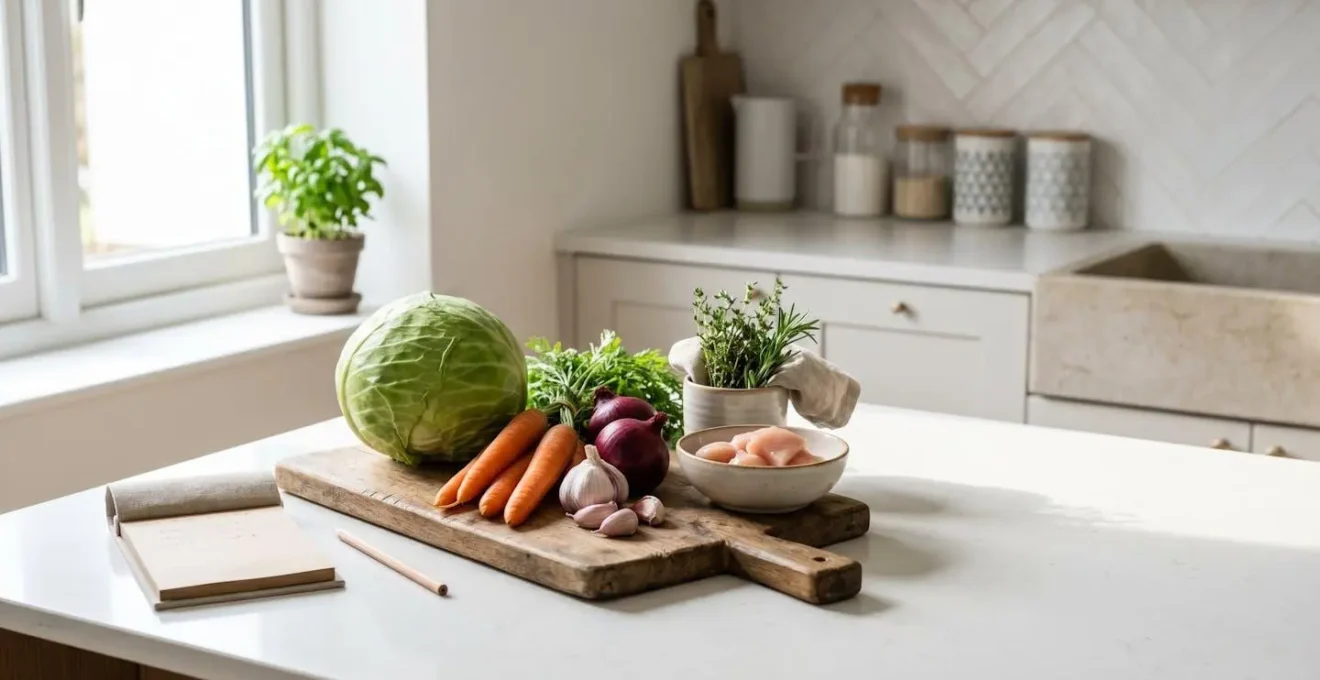
But what if the solution wasn’t about restriction, but about creating a clever, proactive kitchen system? This guide is built on a simple, practical principle from home economics: resource management. We’re going to move beyond the obvious to build a thrifty, healthy, and waste-free approach to cooking for one. It’s about turning your kitchen into an efficient system that maximizes every ounce of food, energy, and nutrition.
In this guide, we’ll explore the practical strategies to make this happen. From the energy-saving magic of batch cooking to smart shopping for perishables and decoding ready meal labels, you’ll find the tools to eat well without the waste or the worry. Let’s get started.
Summary: A practical guide to no-waste, healthy eating for one
- Why cooking 4 portions and freezing 3 is the ultimate energy saver?
- How to buy perishable veg for one person without throwing half away?
- Frozen vs Fresh Ready Meals: which has acceptable salt levels for hypertension?
- The mistake of eating the same meal every day creating nutrient deficiencies
- Which 5 tinned foods turn into a nutritious meal in 10 minutes?
- How to automate online grocery orders to avoid carrying heavy bags?
- The “tea and toast” syndrome error that leads to rapid frailty
- Supplements vs Whole Foods: Where to get antioxidants on a state pension budget?
Why cooking 4 portions and freezing 3 is the ultimate energy saver?
The idea of “batch cooking” is the cornerstone of an efficient solo kitchen. It’s not about eating the same thing four days in a row. It’s about investing your time and energy once to create three future “fast food” meals that are healthy, cheap, and ready when you are. Think of it as paying yourself forward. Cooking one large pot of chili, stew, or soup uses far less gas or electricity than cooking four separate small meals from scratch.
The savings are not just theoretical; they are tangible. In fact, smart kitchen habits like batch cooking can lead to significant savings on your utility bills. An analysis from the Consumer Council shows that efficient kitchen practices can save a household around £158 per year (approximately $200 USD). This is money that stays in your pocket, simply by being strategic about when and how you use your cooker.
To make this work, freezer management is key. A cluttered, inefficient freezer is a waste of energy and space. The goal is to create a library of meals you can access quickly. The key is to freeze portions flat in freezer bags rather than using bulky tubs. This allows you to stack them vertically like files in a cabinet, maximizing every inch of space. Always label each portion with the meal and the date so there are no mystery meals later on. Most importantly, let the food cool completely before freezing to prevent ice crystals, which cause freezer burn and ruin the texture.
When it’s time to eat, you have a home-cooked meal in minutes. Just ensure you reheat it thoroughly until it’s steaming hot all the way through—a food thermometer is a great tool here, aiming for at least 70°C (158°F) for two minutes to ensure it’s perfectly safe to eat. This is your homemade, healthy, and virtually free ready meal.
How to buy perishable veg for one person without throwing half away?
The fresh produce aisle can feel like a battlefield for the solo cook. That beautiful bag of spinach or bunch of asparagus is destined for the bin before you can get through it all. This isn’t just wasteful; it’s a financial drain. It’s estimated that $300-$600 is wasted annually by single-person households on food that is bought but never eaten. The key is a two-pronged strategy: buy smarter and store better.
First, abandon the idea that you need a huge variety of fresh vegetables each week. Instead, adopt a “two short-life, three long-life” rule. Each week, buy two vegetables that need to be eaten quickly (like mushrooms or spinach) and three that will last much longer (like carrots, onions, or cabbage). This gives you variety without the pressure. And don’t overlook the loose vegetable section; buying one pepper or two carrots is always better than a pre-packaged bag you won’t finish.
The second part of the strategy is embracing your freezer as a vegetable crisper. This is where frozen vegetables become your best friend. They are picked and frozen at peak ripeness, locking in nutrients. There’s no washing, no chopping, and zero waste—you just use the cupful you need and put the rest back. They are perfect for adding a quick, nutritious boost to any meal, from omelettes to soups.
Proper storage is the final piece of the puzzle. Not all vegetables belong in the same place. Knowing what goes where can double the life of your produce. Mushrooms last longer in a paper bag, while asparagus stays fresh stood upright in a glass of water. A simple storage guide can be an invaluable tool for resource management in the kitchen.
| Eat This Week (3-5 days) | Storage Method | Lasts Longer (1-3 weeks) | Storage Method |
|---|---|---|---|
| Mushrooms | Paper bag in fridge | Cabbage | Crisper drawer, whole |
| Spinach | Sealed container with paper towel | Carrots | Fridge, unpeeled |
| Asparagus | Upright in water | Onions | Cool, dark, dry place |
| Bell peppers | Crisper drawer | Butternut squash | Counter or pantry |
| Broccoli | Sealed bag in fridge | Potatoes | Cool, dark, dry place |
Frozen vs Fresh Ready Meals: which has acceptable salt levels for hypertension?
Let’s be blunt: sometimes, you just don’t have the energy to cook. On those days, a ready meal can feel like a lifesaver. However, for anyone managing blood pressure, the convenience can come at a steep price. The vast majority of ready-made meals, whether fresh or frozen, are loaded with sodium, a primary driver of hypertension.
The numbers are often shocking. A detailed analysis of 40 common frozen dinners revealed a staggering range, with many containing 700-1,100mg of sodium per serving. Considering the daily recommended limit is around 2,300mg (and often advised to be as low as 1,500mg for those with hypertension), a single meal can wipe out nearly half of your daily allowance. There is little difference between “fresh” and “frozen” in this regard; the processing is the problem.
So, if you must buy a ready meal, you need to become a savvy label detective. Don’t be fooled by pictures of healthy vegetables on the box. Turn it over and look at the nutrition facts panel. According to guidance from Johns Hopkins Medicine, you should aim for meals with 600mg of sodium or less per serving. A useful shortcut is the “5/20 Rule”: if the % Daily Value for sodium is 5% or less, it’s low; if it’s 20% or more, it’s high. Put anything in the 20% category back on the shelf.
Even with a “better” choice, you can improve it at home. A simple trick is to add a handful of your own unsalted frozen vegetables (like peas or sweetcorn) to the meal before heating. This bulks up the portion, increases the nutritional value, and effectively dilutes the salt content per bite. A squeeze of lemon juice or a dollop of plain yogurt can also add flavor without adding sodium.
Your 5-Step Ready Meal Sodium Audit
- Check the Label: Before buying, find the nutrition panel. Is the sodium content 600mg or less per serving?
- Apply the 5/20 Rule: Look at the % Daily Value (%DV) for sodium. Is it closer to 5% (good) or 20% (bad)?
- Inspect the Ingredients: Is protein (like chicken or fish) one of the first ingredients, or is it a long list of starches and additives? Choose shorter ingredient lists.
- Plan Your Boost: Do you have unsalted frozen vegetables or a lemon at home? Plan to add a nutritional boost to dilute the salt and enhance the flavour.
- Compare and Choose: If you have a choice between two meals, always pick the one with the lower sodium and shorter ingredient list, even if it costs a few cents more. Your health is worth it.
The mistake of eating the same meal every day creating nutrient deficiencies
Finding a meal you enjoy and that is easy to prepare can feel like a victory. The temptation is to put it on repeat. Chicken salad for lunch every day, or the same soup for dinner. While this simplifies decision-making, it creates a hidden danger: a monotonous diet. Eating the same few foods day in and day out, even if they are “healthy,” can lead to significant micronutrient deficiencies.
Different foods contain different vitamins and minerals. A diet rich in variety is like taking out nutritional insurance. If you only eat a narrow range of foods, you risk missing out on entire categories of essential nutrients. For example, older adults are particularly susceptible to certain deficiencies. Detailed research estimates that among older adults, up to 15% are deficient in Vitamin B12, with another 20% at borderline levels. This is often because B12 absorption decreases with age, and a repetitive diet may lack sufficient sources.
Case Study: The Link Between Diet Monotony and Health Risks
The danger of a monotonous diet is not just theoretical. A revealing study of 234 heart failure patients published by the American Heart Association found a direct correlation between lack of dietary variety and poor health. Patients who ate the same foods every day had significantly more deficiencies across 18 key vitamins and minerals. This demonstrates that even if you’re eating enough calories, a lack of food diversity can directly lead to malnutrition, creating a state of being “overfed but undernourished.”
The solution isn’t complicated or expensive. It’s about making small, intentional swaps and additions. If you love toast for breakfast, can you top it with a different thing each day? Smashed avocado one day, a boiled egg the next, and tomato on the third. The foundation of the meal is the same, but the nutritional profile is vastly different. The same goes for flavour. Instead of reaching for the salt shaker, explore the world of herbs and spices. They add incredible flavour, zero sodium, and a host of antioxidant compounds.
Think of your plate as a canvas. The goal is to “eat the rainbow.” Brightly coloured fruits and vegetables—like red peppers, orange carrots, green spinach, and purple cabbage—all contain different phytonutrients. By aiming for a variety of colours on your plate throughout the week, you naturally ensure a broader intake of essential nutrients, fortifying your body against deficiency.
Which 5 tinned foods turn into a nutritious meal in 10 minutes?
The pantry is a thrifty cook’s secret weapon, and tinned goods are its star players. Forget the stigma; modern tinned foods are high-quality, nutritious, and incredibly convenient. They require no refrigeration, last for years, and can be transformed into a hot, balanced meal in under 10 minutes. For a solo cook, a well-stocked “core five” set of tins is the ultimate safety net against a “tea and toast” dinner.
Here are the five essential tinned foods every single-person household should have:
- Tinned Fish (Salmon or Sardines): This is a powerhouse of nutrition. It provides high-quality protein for muscle maintenance, essential omega-3 fatty acids for brain and heart health, and, if you buy it with the bones, a fantastic source of calcium and Vitamin D for bone health.
- Tinned Beans (Cannellini or Chickpeas): An excellent source of plant-based protein and, crucially, fiber. Fiber helps manage blood sugar levels, promotes digestive health, and keeps you feeling full longer. They are ready to use straight from the tin.
- Tinned Chopped Tomatoes: The versatile base for countless quick meals. They can become a soup, a sauce for pasta, or a base for a quick stew. They are also a great source of Vitamin C, which helps your body absorb iron.
- Tinned Sweetcorn: Often unfairly dismissed, sweetcorn provides energy-giving carbohydrates, more fiber, and adds a touch of sweetness and texture to any dish. It requires no cooking and can be stirred into salads, soups, or rice dishes.
- Tinned Lentils: Like beans, lentils are a fantastic source of protein and iron, which is vital for preventing anemia and fatigue. Unlike dried lentils, tinned ones are pre-cooked and ready to go, saving you time and energy.
With these five items, a nutritious meal is always minutes away. For a super-fast hot meal, drain a tin of salmon and a tin of cannellini beans, mix them with a tin of chopped tomatoes, and heat for five minutes. Serve with a slice of wholemeal toast. For a no-cook option, mash a tin of beans with a tin of tuna, add a squeeze of lemon juice and black pepper, and you have a delicious, high-protein salad or sandwich filling. It’s simple, cheap, and infinitely better than a biscuit from a packet.
The table below highlights why these tinned goods are such a smart choice for senior health, combining significant nutritional benefits with the practicality of a long shelf life, ensuring you always have the building blocks of a good meal on hand.
| Tinned Food | Key Nutrients | Senior Health Benefit | Average Shelf Life (Unopened) |
|---|---|---|---|
| Sardines/Salmon | Omega-3, Calcium, Vitamin D | Bone health, heart health, brain function | 3-5 years |
| Cannellini Beans | Protein, Fiber, Iron | Digestive health, steady blood sugar | 2-5 years |
| Chopped Tomatoes | Vitamin C, Lycopene | Immune support, antioxidant protection | 18-24 months |
| Sweetcorn | Fiber, B Vitamins | Energy metabolism, digestive regularity | 2-5 years |
| Lentils | Protein, Iron, Folate | Anemia prevention, muscle maintenance | 2-3 years |
How to automate online grocery orders to avoid carrying heavy bags?
One of the biggest physical challenges of grocery shopping is the sheer weight of it all. Tins, jars, bottles of milk, and bags of potatoes can be a real struggle to carry home, leading to strain or even falls. Online grocery delivery has revolutionized this, but it can be taken one step further with automation. Setting up a system to automate your shopping for heavy, non-perishable staples is a powerful way to preserve your energy and independence.
Most supermarket websites have features designed for this very purpose. The first step is to create a “Favorites” list. Go through the site and add all your regular, heavy, or bulky items to this list: tinned tomatoes, big bags of porridge oats, long-life milk, toilet paper, cleaning supplies. This creates a master template for your core needs. Now, instead of searching for these items every week, you can add them to your basket with a single click.
The next level of automation is using the “Past Orders” feature. If your weekly shop is fairly consistent, you can simply find a recent order and click “re-order.” This will populate your basket with the exact same items. You can then make small adjustments—removing what you don’t need this week and adding any fresh items—before checking out. This turns a 30-minute task into a 5-minute one.
For true hands-free convenience, you can link your supermarket account to a voice assistant like Alexa or Google Home. While you’re in the kitchen and notice you’re running low on olive oil, you can simply say, “Alexa, add olive oil to my shopping list.” This builds your list incrementally throughout the week without you having to write anything down. When it’s time to shop, the full list is waiting for you in your supermarket app. This combination of tools transforms grocery shopping from a physical chore into a simple administrative task.
- Create a ‘Favorites’ list on your supermarket’s website with heavy staples.
- Use the ‘Past Orders’ feature to reorder your standard shopping list in one go.
- Set up voice assistant commands like, “Alexa, add milk to my shopping list” for hands-free list building.
- Link your voice assistant’s shopping list directly to your supermarket app for seamless transfer.
- Schedule delivery for a time when you are home and can take your time putting things away, or when a family member might be there to help.
The “tea and toast” syndrome error that leads to rapid frailty
The “tea and toast” syndrome is a deceptively gentle name for a serious nutritional crisis. It describes a pattern of eating that often develops in older adults, especially those living alone. When energy is low, appetite is poor, or chewing is difficult, it becomes easy to fall into a routine of eating small, soft, carbohydrate-based snacks instead of proper meals. A biscuit here, a slice of toast there. While it fills a gap, this pattern is dangerously low in protein, the essential building block for muscle, bone, and overall strength.
As the Oregon State University Extension Service notes, this is a common and concerning issue. They state:
Issues with chewing and swallowing can lead people to avoid certain foods. This causes a monotonous diet and malnutrition.
– Oregon State University Extension Service, Nutrition for Older Adults: Preventing Malnutrition as the Body Ages
This avoidance leads directly to a low-protein diet, which accelerates age-related muscle loss (sarcopenia). This loss of muscle is a primary driver of frailty, increasing the risk of falls, reducing mobility, and compromising independence. A diet of tea and toast is, quite literally, a recipe for rapid decline. The good news is that breaking this cycle doesn’t require complicated cooking. It requires having easy, high-protein alternatives readily available for those low-energy moments.
The key is to think “grab and go.” Stock your fridge with options that require zero or minimal preparation but pack a protein punch. A single pot of Greek yogurt can contain 15-20 grams of protein. A ready-made protein shake offers even more. Even an egg, microwaved in a mug for one minute, provides a soft, easy-to-chew meal with around 14 grams of protein.
Another powerful technique is “fortification.” This means adding protein to the foods you already eat. A scoop of unflavored protein powder can be stirred into porridge, soup, or even a mug of milky tea, instantly adding 15-20 grams of protein without changing the taste. Simply swapping water for whole milk when making instant soup or porridge is another easy way to boost both protein and calories. These small, simple actions are a powerful defence against frailty.
- Greek yogurt pot: No preparation needed, offers 15-20g of protein.
- Ready-made protein shake: The ultimate grab-and-drink solution, with 20-30g of protein.
- Microwaved scrambled egg: Soft, easy to chew, and ready in 1 minute, providing 12-14g of protein for two eggs.
- Cottage cheese with canned peaches: A no-cook, high-protein snack with 11-13g of protein per 100g serving.
- Fortification: Stir unflavored protein powder into porridge or soup to boost protein by 15-20g.
Key takeaways
- A thrifty kitchen is a system: batch cooking, smart storage, and a well-stocked pantry are its pillars.
- Nutrient variety is non-negotiable; rotating foods and “eating the rainbow” prevents deficiencies.
- Protein is paramount for avoiding frailty; prioritize easy-to-eat, high-protein snacks over simple carbohydrates.
Supplements vs Whole Foods: Where to get antioxidants on a state pension budget?
The supplement aisle is a dazzling and expensive place, promising longevity and vitality in a pill. For someone on a fixed income, it can also be a source of confusion and anxiety. Do you need these expensive antioxidant supplements, or can you get what you need from food? For the vast majority of nutrients, the answer is clear: food first. Whole foods provide a complex package of nutrients that work together in a way a single supplement cannot replicate.
Antioxidants—compounds like Vitamin C, Vitamin E, and polyphenols that protect our cells from damage—are abundant in cheap, everyday foods. You do not need to buy exotic “superfoods” or pricey pills. The most powerful antioxidant sources are likely already in your kitchen or are very affordable to add. A simple cup of black or green tea costs pennies and is loaded with polyphenols. A bag of carrots is inexpensive, lasts for weeks, and provides a huge dose of beta-carotene. A head of cabbage is one of the cheapest vegetables you can buy and is packed with Vitamin C and other protective compounds.
Frozen foods, particularly frozen mixed berries, are another budget-friendly powerhouse. They are often cheaper than fresh, available year-round, and retain their antioxidant potency perfectly. Onions and tinned tomatoes, the base of so many thrifty meals, are also excellent sources of the antioxidants quercetin and lycopene, respectively. Prioritizing these humble, affordable whole foods is the most cost-effective and biologically effective way to get your antioxidants.
That said, there are a couple of specific nutrients where supplementation might be necessary for older adults, but this should always be discussed with a doctor. Due to changes in digestion and skin synthesis, Vitamin B12 and Vitamin D are two key areas of concern. Your doctor can run a simple blood test to check your levels and recommend a specific supplement dosage if you are deficient. Trying to self-diagnose or taking a random multivitamin is often a waste of money and can be ineffective.
| Nutrient Type | Best Obtained From | Reason | Example Sources |
|---|---|---|---|
| Antioxidants (Vitamin C, E, polyphenols) | Whole Foods | Better absorption, synergistic compounds, cost-effective | Berries, tea, carrots, cabbage, onions |
| Vitamin B12 | May require supplement | Absorption decreases with age (up to 15% deficient) | Fortified cereals, or B12 supplement if advised by doctor |
| Vitamin D | May require supplement | Reduced skin synthesis, limited sun exposure in seniors | Fortified milk, fatty fish, or D3 supplement (discuss with doctor) |
| Calcium | Preferably whole foods, supplement if needed | Food sources include other beneficial nutrients | Dairy, tinned sardines with bones, fortified plant milk |
Now that you have a complete toolkit for managing your kitchen, the next step is to put it into practice. Start small, be patient with yourself, and transform the challenge of cooking for one into a rewarding system of health and thrift.