
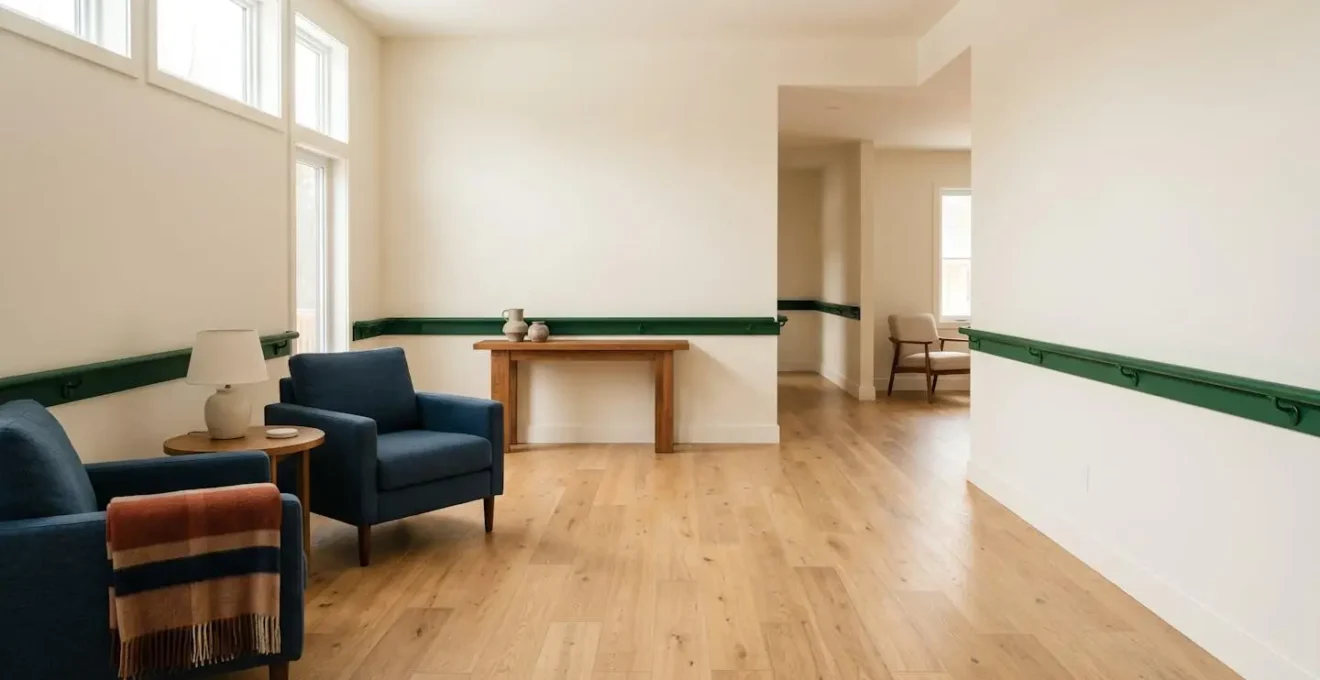
A thoughtfully designed home can become your most powerful, non-medical partner in dementia care, actively reducing your loved one’s anxiety and risk of injury.
- Focus on sensory cues (high-contrast colors, warm lighting) instead of just physical barriers to guide and protect.
- Prioritize dignity-preserving strategies like environmental camouflage for exits and respectful visual aids for routines.
Recommendation: Start with a simple “dusk audit” to see the home through their eyes and identify the most critical areas for change.
When a loved one is diagnosed with dementia, a family’s focus naturally turns to medical care and personal support. Yet, one of the most powerful allies in this journey is often overlooked: the home itself. For a person with changing sensory perception, the familiar environment can become a source of confusion, anxiety, and even danger. The common advice—install grab bars, lock doors—scratches the surface but often fails to address the root of the issue: the cognitive load that a confusing environment places on a stressed mind.
The challenge is not just to prevent accidents, but to do so with grace and respect for the person’s dignity. Creating a fortress might feel safer, but it can also feel like a prison, increasing agitation and a sense of loss of control. This guide moves beyond the basics. We will not be talking about medical interventions, but about environmental design. The core idea is simple yet profound: instead of asking your loved one to constantly adapt to a challenging world, we can adapt their world to gently support them. We can shape the home’s sensory environment—its light, color, sound, and structure—to act as a silent, intuitive caregiver.
This approach is about pre-empting distress before it begins. It’s about understanding that a dark-colored toilet seat isn’t just a decoration; it’s a clear visual target that reduces nighttime anxiety. It’s about realizing that a patterned carpet can be a source of terrifying hallucinations in low light. By learning to see the home through their eyes, we can make simple, non-medical changes that have a dramatic impact on safety, calm, and quality of life for everyone involved.
This article will guide you through a series of practical, empathetic strategies. We will explore how to use visual cues to prevent falls, how to manage wandering triggers without resorting to locks, and how to structure daily life in a way that provides comfort and security. Each section is designed to give you the “why” behind the “what,” empowering you to create a truly supportive and gentle space.
Summary: A Gentle Guide to Creating a Dementia-Safe and Dignified Home
- Why visual contrast prevents trips better than warnings for dementia sufferers?
- How to prevent wandering triggers without making the home look like a prison?
- CCTV vs Passive Sensors: which respects privacy while ensuring safety?
- The patterned carpet mistake that causes hallucinations in low light
- How to adjust lighting and sound at 4 PM to reduce sundowning agitation?
- Why a lighted path from bed to toilet prevents 30% of night falls?
- How to use a “visual schedule” board without feeling treated like a child?
- How to structure daily routines to delay memory loss progression?
Why visual contrast prevents trips better than warnings for dementia sufferers?
For a person living with dementia, vision is not just about clarity; it’s about interpretation. Changes in the brain can impair depth perception and the ability to distinguish between objects and surfaces. A white plate on a white tablecloth can become invisible; the edge of a stair can disappear. In this context, verbal warnings like “watch your step” are often ineffective because the brain can no longer easily process the verbal command and connect it to a visual hazard it can’t perceive. The environment must speak a simpler, more direct language: the language of contrast.
High contrast acts as a non-verbal cue, making the world more legible. It helps the brain define edges, identify important objects, and navigate space with less cognitive effort. Think of it as outlining the important features of a room. This principle goes far beyond safety. A striking example comes from a study showing that using high-contrast red plates for residents with dementia can lead to a 25% increase in food consumption according to research, simply because the food becomes more visible against the plate. The same logic applies to safety. A dark-colored toilet seat on a white toilet is easy to locate at night, reducing anxiety and the risk of a fall.
The best colors are those that are solid and sit on opposite ends of the color wheel. For example, a yellow placemat on a blue table, or a red cup on a white saucer. Avoid patterns, which can be confusing. The goal is to make key items—like light switches, tableware, furniture, and bathroom fixtures—“pop” from their background. By reducing the visual guesswork, you reduce the cognitive load, which in turn lowers stress and enhances independence. The home becomes less of a puzzle to be solved and more of a predictable, easy-to-read space.
How to prevent wandering triggers without making the home look like a prison?
Wandering is one of the most stressful and feared behaviors for caregivers. The instinct is often to lock doors and install alarms, but this can create a restrictive environment that increases agitation and a sense of being trapped. A more gentle and effective approach focuses on understanding the “why” behind the wandering—is it boredom, a search for something familiar, a response to a past routine?—and then using environmental design to redirect the impulse rather than block it.
This strategy is often called “environmental camouflage.” Instead of making a door a forbidden object of focus, the goal is to make it visually disappear. Painting an exit door the exact same color as the surrounding walls, with no contrasting trim, can make it blend in so effectively that it is no longer perceived as an exit. You can also hang a curtain or a fabric mural over the door. Placing locks in unconventional positions—very high or very low—puts them outside the normal line of sight and reduces the chance they will be manipulated.
As the Administration for Community Living notes, a key strategy is “Eliminating overstimulation, such as visible doors that people use frequently; noise; and clutter.” This reinforces the idea of reducing cognitive load. Instead of a locked door that creates a frustrating puzzle, a camouflaged door removes the puzzle entirely. To complement this, create positive diversions. Set up “purposeful engagement stations” away from exits: a drawer of safe fabrics to sort, a desk with papers for “office work,” or a nurturing corner with soft dolls. You can also design a safe, circular walking path inside the home that always leads back to a comforting space, satisfying the need to move without leading to an exit.
Using environmental design and other strategies to address common causes of unsafe wandering, for example: Eliminating overstimulation, such as visible doors that people use frequently; noise; and clutter.
– Administration for Community Living, Responding to the Wandering and Exit-seeking Behaviors of People with Dementia
CCTV vs Passive Sensors: which respects privacy while ensuring safety?
The question of monitoring a loved one at home brings up a difficult balance: the need for safety versus the fundamental right to privacy and dignity. Traditional CCTV cameras are often the first thought, but for many families, the idea of video recording a parent in their bedroom or bathroom feels like a profound violation. It can make a home feel like a hospital ward and can erode the trust and intimacy essential to the caregiving relationship. The key is to shift the focus from “seeing” your loved one to “knowing” they are safe.
This is where passive, non-intrusive sensors offer a respectful alternative. These are not cameras. They are small, discreet devices that monitor activity patterns without capturing any images or sounds. For example, a motion sensor by the bed can confirm that your loved one got up at night. A sensor on the bathroom door can show how long they were inside. A sensor on the refrigerator can track if they are eating, and sensors on the main exit can alert you if the door opens at an unusual time. This technology provides peace of mind through data, not surveillance.
This is what a discreet, privacy-preserving sensor looks like—a small, unobtrusive device that blends into the background of a room.
The system learns the person’s daily routine. You don’t watch a live feed; you receive an alert on your phone only when an anomaly occurs—for example, if Mom has been in the bathroom for over an hour, or if Dad hasn’t gotten out of bed by his usual time. This approach respects their private space completely. It allows them to live with autonomy and dignity, free from the feeling of being watched. For the caregiver, it replaces constant worry with targeted, actionable information. You are alerted when you are needed, and you can relax when you are not, knowing the system is standing silent watch.
The patterned carpet mistake that causes hallucinations in low light
For a person with dementia, the line between reality and perception can become blurred, especially as daylight fades. A common but often misunderstood trigger for visual disturbances is something as seemingly innocuous as a patterned floor. Busy carpets, speckled linoleum, or even wood grains with strong patterns can transform in low light. The brain, struggling to interpret the confusing visual data, may “fill in the blanks,” causing the patterns to appear as if they are moving, swirling, or forming into frightening shapes, insects, or faces.
This phenomenon, known as misidentification, is not a sign of “madness” but a logical consequence of a brain working hard to make sense of a confusing sensory world. What appears to be a beautiful floral carpet in bright daylight can become a field of crawling bugs at dusk. A dark spot in a pattern can be misinterpreted as a hole in the floor, leading to hesitation, fear of walking, and an increased risk of falls. The safest flooring options are always solid, non-glare, and light-colored. This provides a calm, predictable visual foundation that doesn’t demand extra cognitive work to interpret.
It’s crucial to experience the home environment as your loved one does. This means getting down to their eye level and, most importantly, observing the space during the transitional light of evening. What is comforting and clear at noon can become menacing at twilight. By identifying these potential visual triggers, you can take simple steps to mitigate them, such as using solid-colored area rugs to cover busy patterns or, if renovating, choosing flooring designed with these perceptual challenges in mind. The goal is to create a visually quiet and stable foundation for their world.
Your 5-Step Dusk Audit Plan: Identifying Visual Triggers
- Perspective & Timing: Begin your audit at sunset. Walk through the main living areas and view them from your loved one’s typical seated or standing eye level to see what they see.
- Pattern Inventory: Use your phone to photograph any busy or high-contrast patterns on carpets, wallpaper, upholstery, or even bedspreads. These are potential sources of misinterpretation.
- Shadow & Reflection Mapping: Note where furniture or objects cast long, distorted shadows that could be mistaken for figures. Check windows and dark TV screens for confusing reflections that might look like a person in the room.
- Lighting Assessment: Identify “hot spots” of harsh glare and deep pools of shadow. The goal is even, diffused light, so note any areas where the contrast between light and dark is stark.
- Action Plan: Based on your audit, create a simple plan. Quick fixes could include closing curtains before dark to stop reflections, using solid-colored throws to cover patterned sofas, and repositioning lamps to eliminate frightening shadows.
How to adjust lighting and sound at 4 PM to reduce sundowning agitation?
Sundowning—the increase in agitation, confusion, and anxiety that often occurs in the late afternoon and evening—is a common experience for people with dementia. While its exact causes are not fully understood, it’s believed to be linked to fading light, fatigue, and disruptions to the body’s internal clock. Rather than reacting to agitation once it starts, we can proactively create a calm, sensory transition from day to night, starting around 3:30 or 4:00 PM.
The first step is to manage light. As natural light begins to fade, the interior of the home can fill with long shadows and confusing reflections on windows, which can be perceived as strangers. Well before sunset, close the blinds or curtains and turn on interior lights. The key is to use warm, even, and diffused lighting. Avoid harsh overhead fluorescents or spotlights, which create glare and deep shadows. Instead, opt for multiple table lamps and floor lamps with fabric shades that cast a soft, amber-toned glow (around 2700K). This signals to the brain that evening is approaching in a gentle, non-jarring way and eliminates visual triggers.
This is the kind of warm, serene atmosphere that helps calm the mind and ease the transition into the evening.
Sound is the second component of this sensory ritual. Turn off the blaring, unpredictable noise of the television, especially the news, which can be highly stressful. Replace it with a calming, predictable soundscape. This could be soft classical music, familiar tunes from their youth (like gentle 1940s music), a nature sounds machine, or even quiet white noise. The consistency of the sound is more important than the specific content. This sensory combination—closing out the dying day, filling the home with warm light, and introducing a soothing soundscape—creates a predictable, comforting ritual that can significantly reduce the anxiety associated with nightfall.
Why a lighted path from bed to toilet prevents 30% of night falls?
The nighttime journey from bed to bathroom is one of the highest-risk activities for an older person, especially someone with dementia. Disorientation upon waking, poor balance, and darkness create a perfect storm for falls. While the exact statistic can vary, the principle is undisputed: a clear, illuminated path dramatically reduces this risk. The solution, however, isn’t to flood the room with bright light. A blast of standard white light can be jarring, increase confusion, and suppress melatonin production, making it difficult to fall back asleep.
The key is a three-point system of low-level, warm-colored lighting. The goal is to illuminate the floor, not the room. This provides just enough visual information to navigate safely without disrupting sleep cycles. The first point is a motion-activated light under the bed frame. As soon as feet touch the floor, a soft glow illuminates the immediate area. Crucially, this light should be amber or red, as these wavelengths have been shown to have the least impact on melatonin. This helps orient the person without fully waking their brain.
The second point is pathway lighting. This can be achieved with motion-activated LED strips placed along the baseboards, creating a “breadcrumb trail” from the bedroom to the bathroom door. This continuous visual guide prevents the disorientation that can occur when moving from a dark space to a lit one. The third and final point is a dim, motion-activated light inside the bathroom itself—either a nightlight, a lighted toilet seat, or a low-wattage lamp. This illuminates the final destination without the need for the user to find the main, often blindingly bright, overhead light switch. This system creates a seamless, safe, and sleep-preserving journey from point A to point B.
How to use a “visual schedule” board without feeling treated like a child?
For a person experiencing memory loss, the structure of a daily routine can be immensely comforting. A visual schedule board is a common tool to provide this structure, but it carries a significant risk: if not implemented thoughtfully, it can feel infantilizing and demeaning. The classic image of colorful, cartoonish icons and velcro strips can feel like a preschool activity, undermining an adult’s sense of identity and dignity. The secret to success lies in the execution: the tool must be designed and used with respect.
First, rebrand the tool. Instead of calling it a “schedule,” use more dignified terms like “Today’s Agenda” or “The Daily Plan.” Second, invest in high-quality materials. A stylish felt letter board, a framed magnetic whiteboard, or an elegant chalkboard that matches the home’s décor instantly communicates more respect than laminated paper. Place it in a central, natural location like a kitchen command center, where any family might keep their calendar, rather than hiding it away in a “sick room.”
The most critical element is co-creation. Involve your loved one in setting up the agenda each morning. Ask, “What should we put on the plan for today?” This transforms it from something being imposed *on* them to something you are creating *with* them, promoting a sense of partnership and ownership. Use respectful imagery, such as actual photos of them enjoying an activity or images that connect to their past identity (e.g., a vintage camera icon for “photo album time”). Frame activities with purpose: “Helping Out” or “Kitchen Prep” is more dignified than “Fold Laundry.” By focusing on adult aesthetics, collaborative use, and respectful language, the visual schedule becomes a tool of empowerment, not a symbol of decline.
Key Takeaways
- The home environment can be actively designed to reduce cognitive load and act as a non-verbal partner in dementia care.
- Prioritize sensory-based solutions like high-contrast colors and warm, even lighting over purely physical barriers to enhance safety with dignity.
- Routines and rituals, from a daily agenda board to a “sundown” protocol, provide a comforting structure that minimizes anxiety and conserves mental energy.
How to structure daily routines to delay memory loss progression?
While there is no cure for dementia, a well-structured daily routine can be a powerful non-medical tool to support cognitive function and improve quality of life. The goal is not to create a rigid, military-style schedule, but a predictable and flexible framework that reduces anxiety and conserves precious mental energy. When the basic decisions of the day—when to eat, when to rest—are outsourced to habit, the brain is freed up to engage in more meaningful connection and activity.
The most effective approach is a “scaffolding” framework built around a few key “anchor points.” These are consistent, non-negotiable events that structure the day, primarily wake-up time, mealtimes, and bedtime. Keeping these anchors at the same time each day helps regulate the body’s circadian rhythm, reducing disorientation and improving sleep. Between these anchors, the day can remain flexible, allowing for spontaneity and adapting to the person’s mood and energy levels. You might schedule one planned activity in the morning (a walk) and one in the afternoon (listening to music), but the time in between is open.
This framework of routine provides a sense of safety and predictability in a world that can feel increasingly chaotic. It reduces the cognitive load of having to constantly ask, “What’s next?” As dementia care experts from TheKey note, this approach allows for better use of the brain’s limited resources. Within this structure, it’s also vital to integrate “familiar novelty”—small, gentle variations on a theme, like a new scent of soap during the familiar bathing routine or a different walking path in the same park. This provides just enough stimulation to keep the brain engaged without causing stress. The routine is a supportive guide, not a rigid master.
A predictable routine outsources basic decision-making to habit, freeing up the brain’s limited energy for more meaningful connection and interaction.
– TheKey Dementia Care Experts, Dementia-Friendly Home: Room-by-Room Safety & Comfort Modifications
By thoughtfully applying these non-medical principles, you can transform a home from a place of potential hazards into a sanctuary of safety, calm, and dignity. Start with one room or one routine; even small changes can make a profound difference in the daily life of your loved one, and in your own peace of mind as a caregiver.